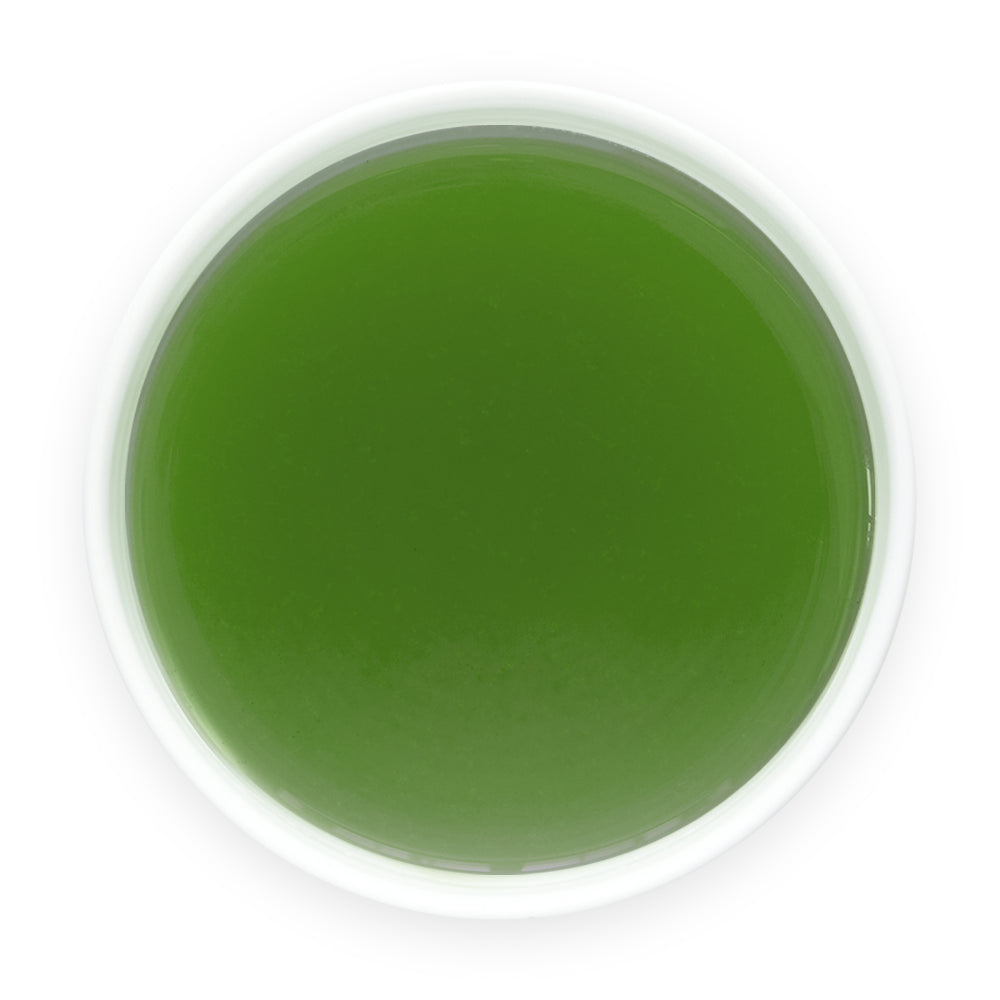
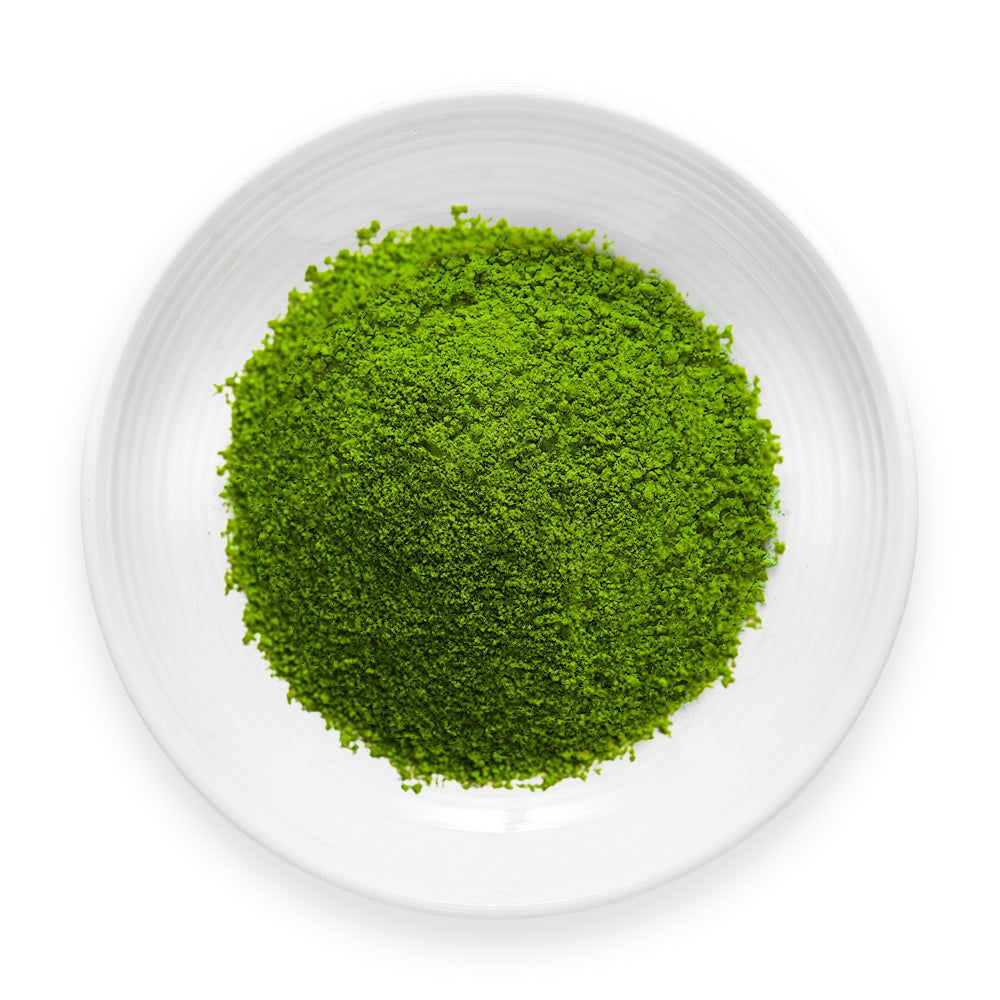
Aojiru health benefits begin with a simple question: what does this green drink actually add to your day? Aojiru is a Japanese drink made with leafy ingredients, often sold as a powder. It can offer a convenient, caffeine-free way to enjoy greens, depending on the blend. Its nutritional contribution, however, comes down to the ingredients and the amount in your cup.
If you are curious about Japanese green juice, it helps to look beyond its bright color. A small packet can fit neatly beside breakfast, but it cannot tell you its fiber or vitamin content by appearance alone. Understanding the label lets you choose a drink for reasons that matter to you, whether that is avoiding caffeine, enjoying a vegetal flavor, or making a simple addition to your routine.
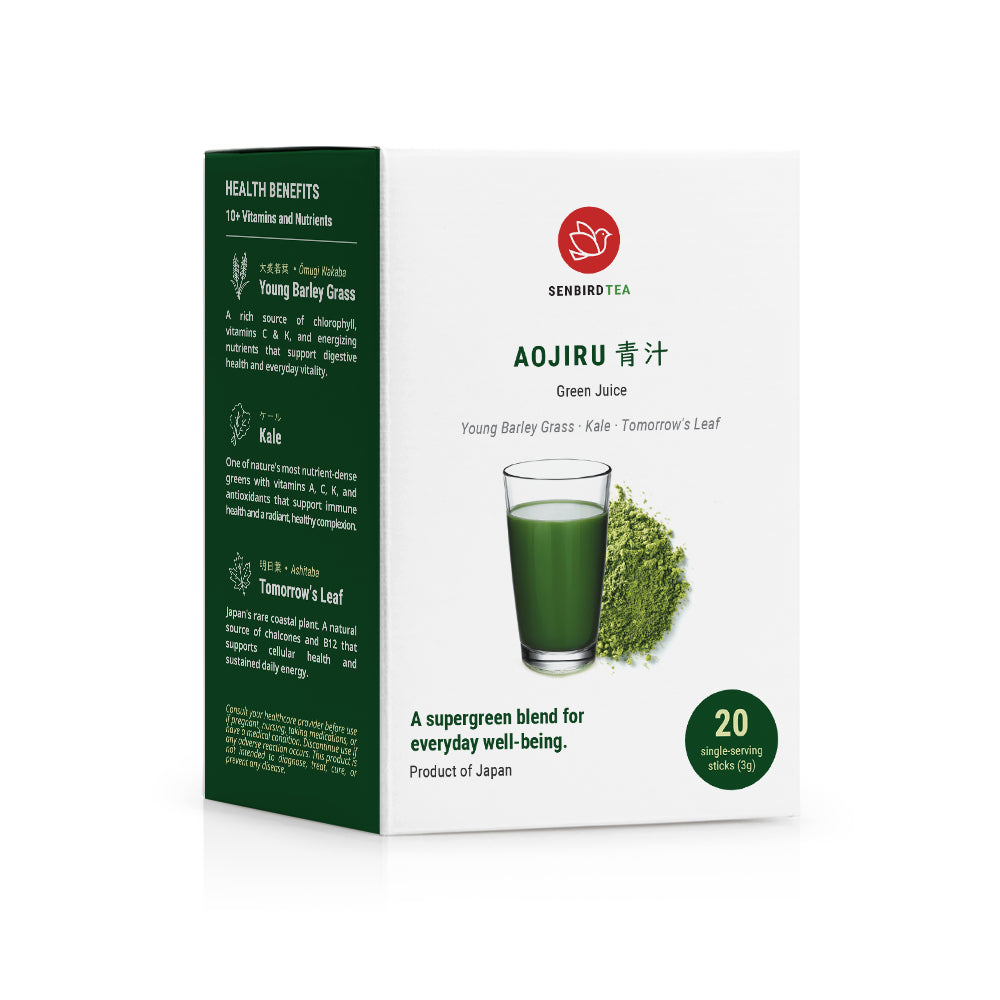
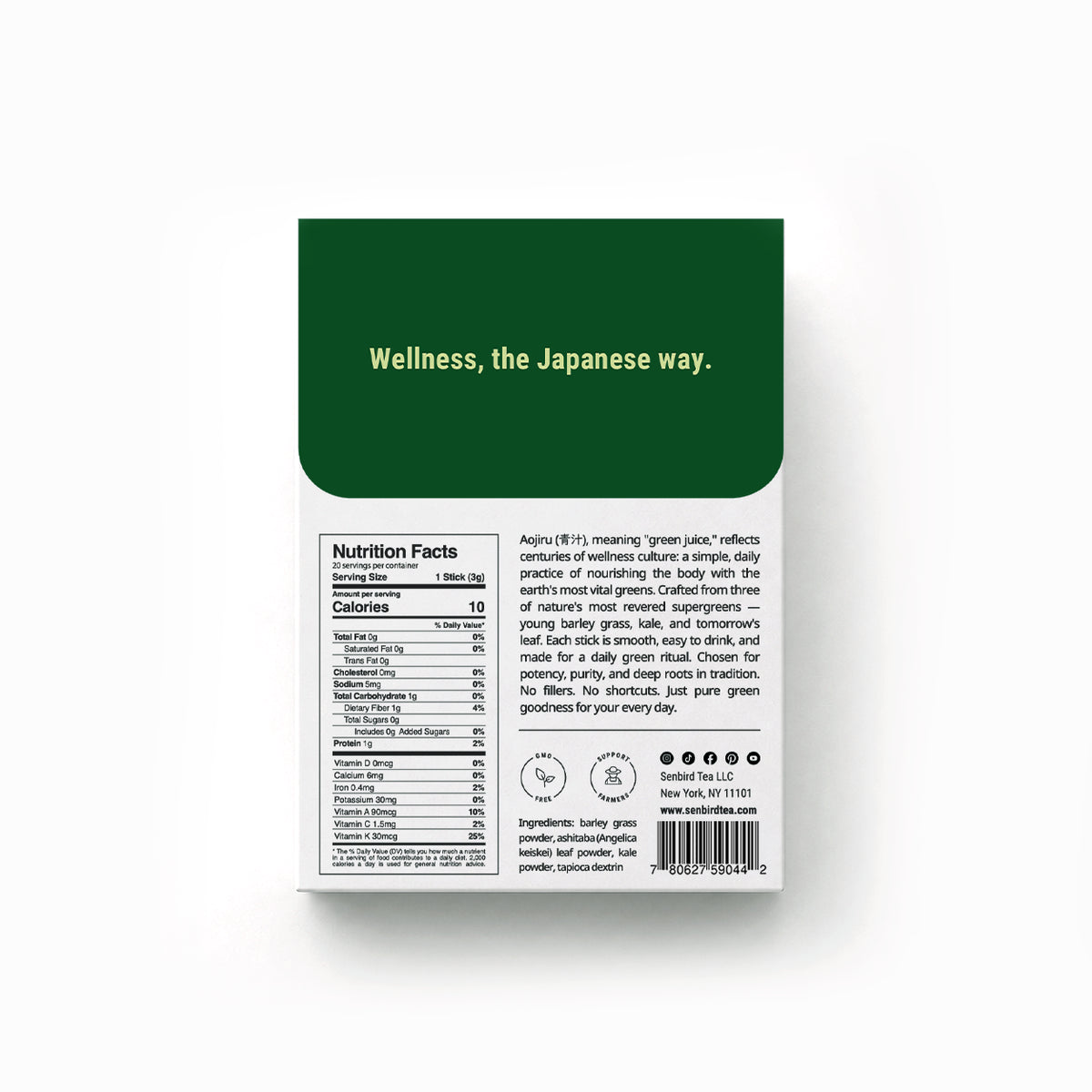
Senbird's blend brings together young barley grass, ashitaba leaf, kale, and tapioca dextrin. Its flavor is mild and vegetal, with a smooth, clean finish. These ingredients give us a useful starting point for understanding Aojiru, while the five points below explain how to put its possible benefits in perspective.
This article is for educational and informational purposes only and is not medical advice. Please consult a medical professional before making changes to your health regimen.

Aojiru (青汁) means "green juice." In a powdered blend, leafy ingredients are processed into a form you mix into a drink. That makes it different from freshly pressing vegetables and collecting their juice. The formula matters: the name Aojiru does not describe one fixed recipe shared by every brand.
Young barley grass is the leafy part of the barley plant. It is different from the roasted grains used for mugicha barley tea. Although the two share a plant origin, they have different forms and flavors. A green powder mixed into water should not be expected to have the toasted character of a barley-grain infusion.
Ashitaba, also known as Angelica keiskei, is another leafy ingredient, while kale may already be familiar from your kitchen. Senbird's blend also contains tapioca dextrin, so its complete ingredient list includes more than the three greens. When weighing Aojiru health benefits, start with that full list rather than a front-of-box description alone.
Aojiru also differs from matcha green tea powder, which is made from tea leaves and naturally contains caffeine. Both may look green in a cup, but their ingredients do different work in a drink. Choose Aojiru for its own leafy character rather than expecting the flavor or caffeine profile of matcha.

For someone who wants a green drink without caffeine, a caffeine-free Aojiru blend has a straightforward advantage. Senbird's formulation does not add caffeine to your day. That can make it a useful choice when you want to keep the enjoyment of preparing a drink but would prefer to skip another caffeinated cup.
This is especially practical when choosing between two green powders. If you usually reach for matcha because you enjoy the preparation and color, consider whether you want caffeine on that particular occasion. An Aojiru made from leafy greens offers a different option without needing to imitate tea.
Check the complete ingredient list when comparing blends. Some products sold as green drinks include tea or other added ingredients, so the category name alone is not enough to establish caffeine content. The same care applies when you combine a powder with another drink: adding matcha changes the caffeine profile of the finished cup.
Caffeine-free describes an ingredient characteristic, not a promise of better sleep or a treatment for stress. You can appreciate the choice without expecting a particular physical effect. Other Japanese herbal teas offer roasted or earthy flavors when you want variety alongside a leafy green drink.
Fiber is an important part of a varied diet, and leafy ingredients make it reasonable to ask about Aojiru's fiber content. The useful answer is the amount listed for the serving you actually drink. A packet's total powder weight is not its fiber weight; that powder contains several components.
The form also matters. A leaf powder, a juice powder, and a concentrated extract should not automatically be treated as nutritionally equivalent. Even two products featuring barley grass can contain different proportions of it. Look for dietary fiber on the nutrition panel rather than estimating it from the ingredient name.
If your goal is to eat more fiber, keep everyday foods central: beans, whole grains, vegetables, fruit, and nuts give you many ways to build it into meals. A green drink can accompany those foods. It should not become a reason to leave them off the plate or assume your daily fiber needs are covered.
Research on barley-leaf preparations does not establish a constipation benefit for every Aojiru blend. The formula and amount studied may differ from the packet in your hand. For a practical decision, compare the label's fiber amount, follow the serving directions, and avoid treating extra scoops as a shortcut to a health result.
The same serving-size principle applies to vitamins and minerals. Seeing kale or barley grass on an ingredient list tells you what went into the blend. It does not tell you how much of a particular nutrient remains in a finished serving, or whether that amount makes a substantial contribution to your diet.
Start with the nutrition panel and check whether its figures describe one serving or a larger amount of powder. A value shown per 100 grams can look impressive beside a small single-serving packet. Compare like with like before deciding that one product provides more than another.
Percent Daily Value, when provided, can help put a listed nutrient into context. It expresses how much a serving contributes toward a daily reference amount. Read it alongside the serving size rather than treating a nutrient's presence as proof that the drink is a major source of it.
For example, leafy vegetables can contribute vitamin K to a diet, but that general fact does not establish the vitamin K amount in a particular Aojiru. The product's own nutrition information is what connects the ingredient story to the cup. This distinction is particularly important if you manage your intake with a healthcare professional.
There is no need to turn a small drink into a replacement for a multivitamin or a balanced meal. Its place can be modest and enjoyable. If you are choosing it to address a specific nutrient need, look for clear per-serving information and ask a qualified professional how it fits your diet.
You may encounter antioxidant claims while reading about Japanese green juice benefits. Researchers have studied compounds in barley leaves and other plants for antioxidant activity. That is a reason for scientific interest, but the kind of study matters when deciding what the finding means for a daily drink.
A laboratory test may measure how a plant extract behaves in a chemical reaction. A human study may examine a marker in blood after a particular preparation and dose. Neither finding automatically shows that a different blended product prevents disease, improves how you feel, or produces the same result at a smaller serving.
Before accepting a broad claim, ask three questions: was the research in people, was the tested ingredient the same as the product, and was the amount comparable? These questions help separate a promising research direction from a benefit demonstrated for the actual drink.
This does not make leafy ingredients uninteresting. It simply keeps the reason for enjoying them proportionate to what is known. Aojiru can be part of a varied food routine without being described as a detox, an anti-aging treatment, or protection against illness. Its green color is inviting; it is not a measure of clinical effectiveness.
One of Aojiru's clearest advantages is practical. A single-serving stick is easy to keep at work or beside your breakfast things, and it takes away the need to measure from a larger container. For someone who enjoys the taste, that small reduction in effort can make the drink easier to include in an ordinary day.
Think of it as an accompaniment to food you already enjoy. You might have a cup with breakfast or alongside lunch, while keeping vegetables and other foods in the meal itself. This is a more realistic place for a small green drink than expecting it to stand in for the meal.
Convenience is also personal. If you prefer chewing vegetables, cooking greens, or enjoying a familiar tea, there is no need to force a powder into your routine. A habit is easier to repeat when you like the experience as well as the idea behind it.
Senbird's Aojiru green juice powder comes in individual sticks, with a mild vegetal profile for readers who want that format. The benefit of the packaging is its simplicity. It does not establish that a packet equals a serving of vegetables or delivers all the nutrition associated with its ingredients.

Begin with your reason for trying it. To avoid caffeine, check the formula. For fiber or a particular nutrient, compare the measured amount per serving. If convenience is the main appeal, look at whether the packet format fits how you actually eat and drink.
Next, consider taste without attaching a health promise to it. Senbird's blend is leafy and mild. Someone who prefers a spicy cup may enjoy shogacha ginger tea instead, while another person may favor roasted flavors. A drink does not have to make the longest list of claims to earn a place in your cupboard.
Finally, keep expectations practical. Follow the label, enjoy Aojiru alongside a varied diet, and choose it because its ingredients, flavor, and format suit you. The most useful way to think about Aojiru health benefits is as a specific contribution to your routine, with nutrition judged from the serving rather than the color of the cup.

No. Matcha is powdered tea leaf, while Aojiru is a green drink made with leafy ingredients that vary by formula. Senbird's Aojiru contains barley grass, ashitaba leaf, kale, and tapioca dextrin. Choose between them according to ingredients, flavor, and caffeine preference rather than assuming that all green powders are interchangeable.
Senbird's Aojiru is caffeine-free. Other blends can have different ingredients, so check the full formula and any caffeine statement. If you add a caffeinated ingredient when preparing it, the finished drink will no longer have the same caffeine profile as the powder on its own.
A small serving of green powder should not replace the vegetables in your meals. There is no established serving-for-serving equivalence for Senbird's blend. Continue to eat a variety of vegetables and treat the drink as an optional addition, rather than a substitute for the foods and textures of a balanced diet.
That depends on the product's measured nutrition per serving. Ingredient names alone cannot establish a "good source" claim. Check the nutrition panel for the nutrient you care about and compare equivalent serving sizes. If the amount is not provided, do not assume it is substantial because the powder contains greens.
If you are pregnant, nursing, taking medication, or managing a medical condition, check with a healthcare professional before adding a new greens product. People taking warfarin need particular care with changes in vitamin K intake. Bring the ingredient and nutrition labels so the advice can address the actual blend and serving.
青汁
A caffeine-free Japanese green juice powder made with young barley grass, kale, and ashitaba, offering a smooth vegetal flavor in convenient single-serving sticks.