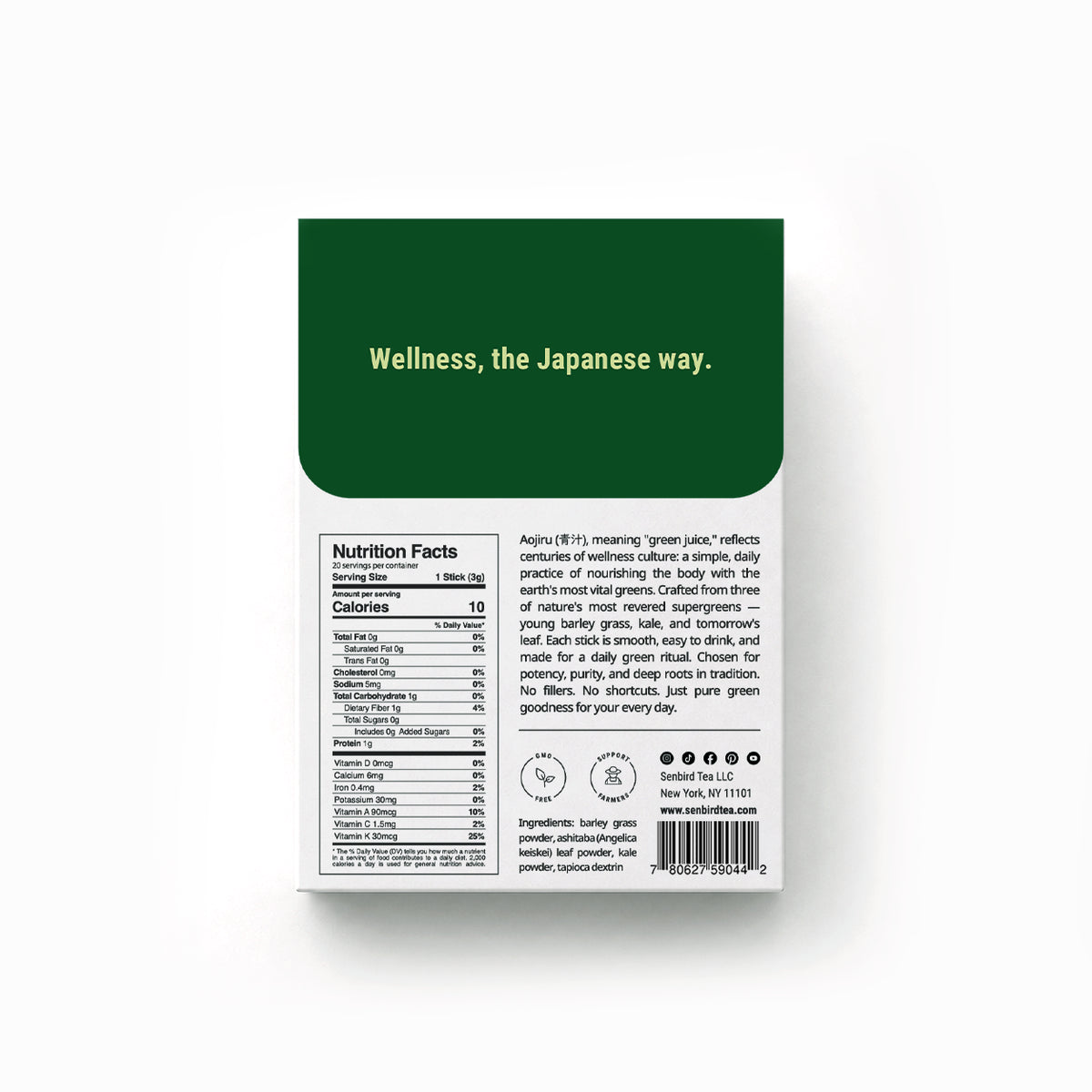
Learning how to make Aojiru green juice starts with a cup, a spoon and a single stick of powder. Mix it with warm water for a simple cup, or make a small warm-water base and finish with ice and cold water. There are no leaves to strain and no juicer to wash. Once you have made the plain version, a few small adjustments help you find the flavor and temperature you enjoy.
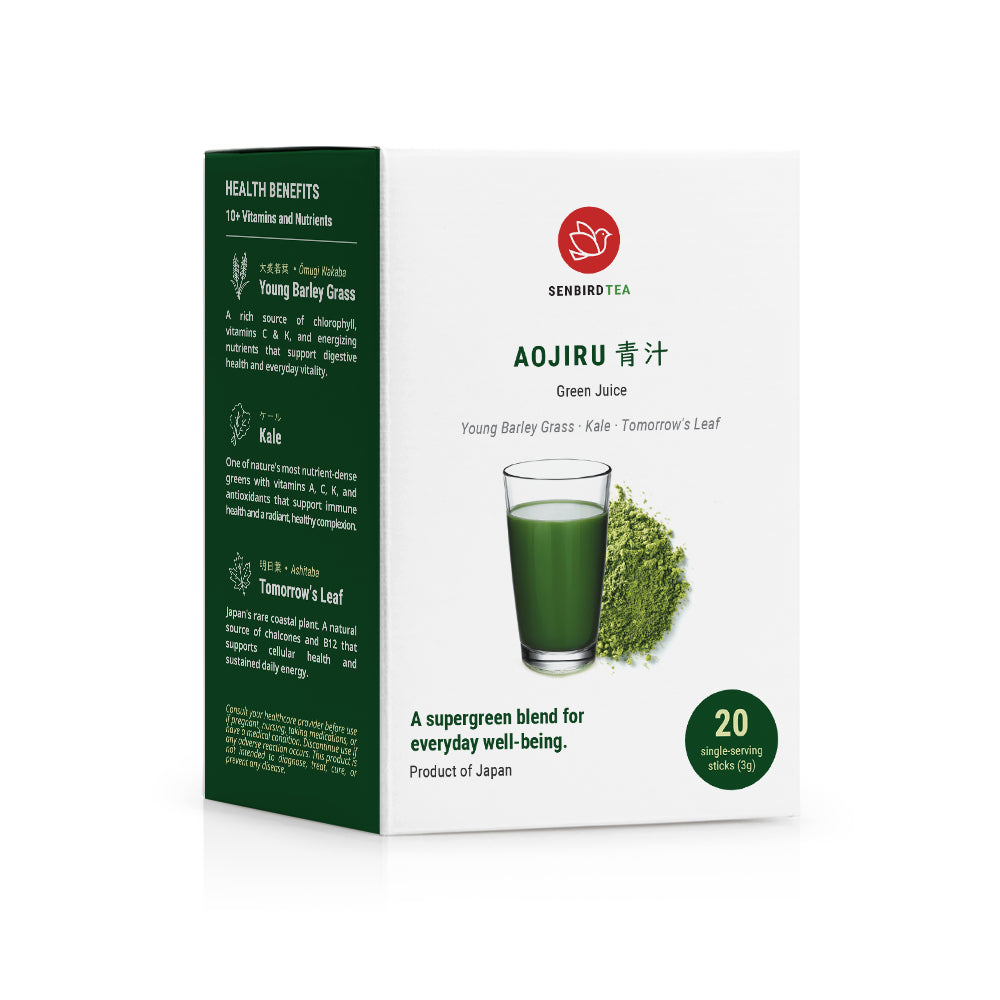
Aojiru (青汁) means "green juice." Here, we are working with ready-made powdered greens rather than juicing fresh vegetables. Senbird's Aojiru green juice powder blends young barley grass, ashitaba and kale with tapioca dextrin in measured sticks. Its mild vegetal character is the starting point, whether you keep your drink plain or add a little lemon.
The easiest first cup is also the most useful: follow the base directions, taste, and change one thing at a time. That way, you can tell whether you prefer more water, a colder finish or a different liquid, rather than guessing what made the difference.

For warm Aojiru, set out one stick of powder, 240 ml (about 8 fl oz) of water, a heat-safe cup and a spoon. Heat the water to 75–85°C (165–185°F). Choose a cup with a little room above the liquid so you can stir without spilling over the rim.
For iced Aojiru, you will need one stick, 2–3 tablespoons of warm water, ice, and 150–200 ml of cold water. Use a small heat-safe cup for the first mix and a taller glass for serving. The warm water and cold water are separate amounts; the ice adds further dilution as it melts.
You do not need to build a new tea setup for this drink. A familiar mug works well. If you enjoy choosing a cup for your daily drinks, our Japanese teaware collection offers pieces to explore, but the practical priority is enough space for easy stirring.
Keep the packet nearby when preparing a different Aojiru blend. Serving sizes and directions can vary, so the amounts below apply to Senbird's sticks. A teaspoon from the kitchen drawer is not a reliable substitute for a measured serving from another product.

Begin with one Aojiru stick. Before opening it, decide whether you want a warm cup or an iced glass. Measuring the liquid first makes the next steps straightforward and gives you a starting point you can repeat.
For a warm drink, measure 240 ml of water and bring it to the recommended 75–85°C range. A temperature-controlled kettle or a kitchen thermometer makes that easier. If you have just boiled the water, let it cool before mixing; a fixed waiting time is less useful than checking the temperature because kettles and cups cool differently.
For iced Aojiru, measure 2–3 tablespoons of warm water for the initial mix. Set aside the cold water and ice until the powder is mixed. Starting in the small cup lets you see the powder clearly, without ice getting in the way of your spoon.
Water is the simplest base for getting to know the blend. Use drinking water you enjoy on its own. There is no need to add sweetener or fruit immediately: a plain first sip gives you a useful reference for any changes you make later.
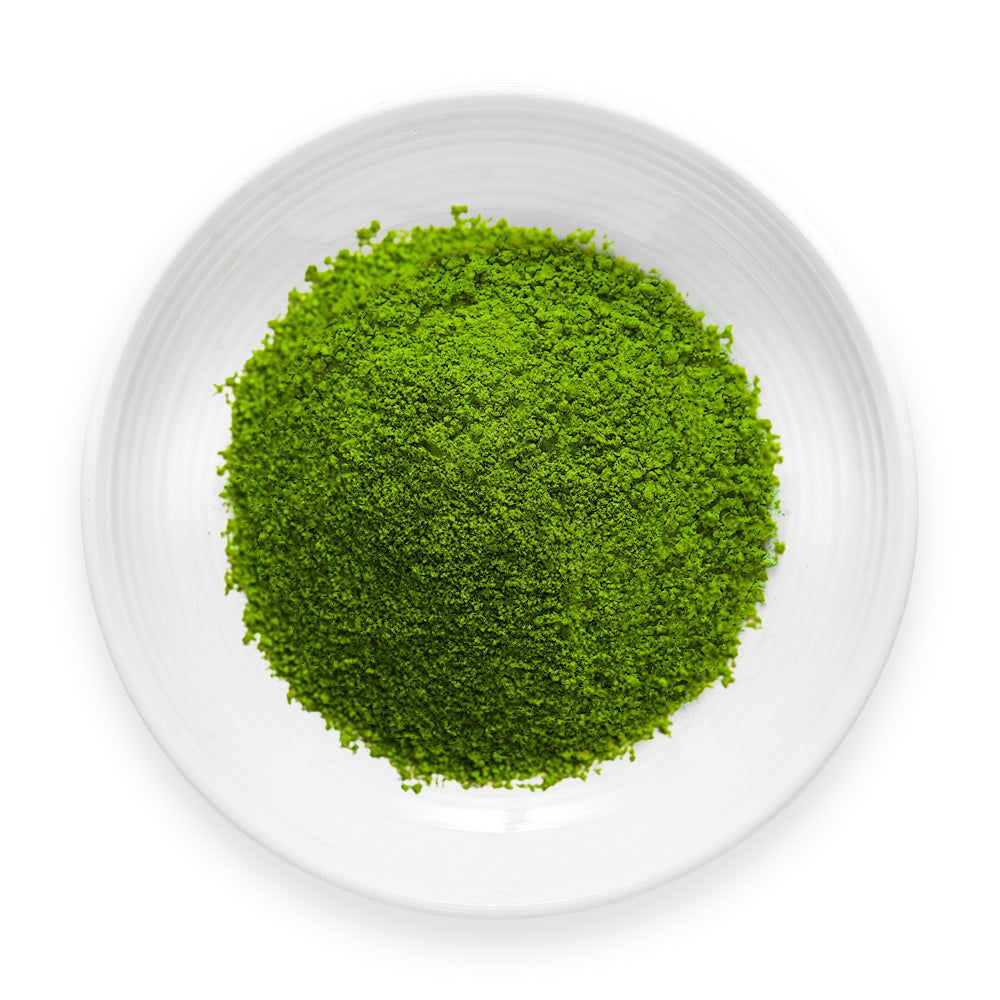
For the warm method, add the contents of the stick to your measured warm water and stir thoroughly. Move the spoon around the bottom as well as the sides of the cup. A quick swirl across the surface may leave a little dry powder underneath.
For the iced method, stir the powder into the 2–3 tablespoons of warm water. Work any visible dry pockets into the liquid before adding the cold water. If powder sticks to the side, draw it back into the mixture with the spoon rather than leaving it above the waterline.
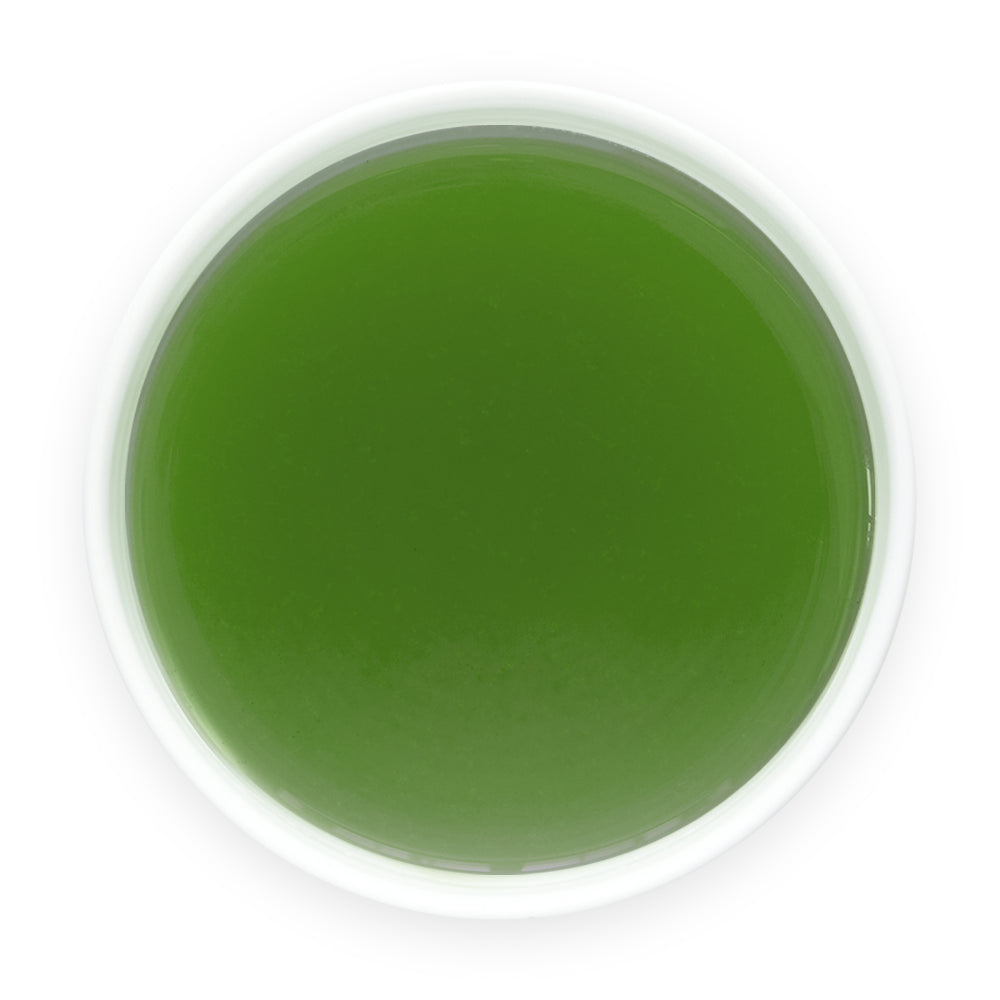
Look for an evenly mixed drink with no pockets of dry powder. You do not need to count seconds, produce a layer of foam or wait for a perfectly clear liquid. This is a powdered-green drink, so its appearance is different from a strained tea infusion.
There is also no steeping stage. Once the powder is mixed, move on to serving. An infuser would keep some of the powder apart from the drink rather than helping you prepare it. Stir in an open cup; do not put warm liquid into a sealed jar and shake it.
For warm Aojiru, let the cup reach a comfortable sipping temperature and taste it plain. If you want a lighter flavor, add a small splash of water, stir, and taste again. Keep the original serving of powder while adjusting the concentration of the drink around it.
For iced Aojiru, put ice in your serving glass and pour the mixed base over it. Add 150–200 ml of cold water and stir so the concentrated base joins the rest of the drink. Use the lower end of that range for a more concentrated starting cup or the higher end for a lighter one.
Leave space for both the ice and the liquid. Because the ice melts, the flavor will soften as you sip. If you prefer a consistent starting point, use the same glass and roughly the same amount of ice each time before experimenting with the cold-water amount.
A squeeze of lemon is another simple finish. Add a little to the plain drink, stir and taste before adding more. Lemon brings acidity, so the goal is a small change in flavor rather than enough juice to hide the greens completely.

A plain warm cup gives you the clearest introduction to the blend's vegetal flavor. Choose this version when you want very little preparation or cleanup: everything happens in one mug, and the spoon you mix with can stay nearby if the drink needs another stir.
You can make the experience more comfortable without changing the ingredients. A cup that is easy to hold, room to stir, and a temperature you can sip safely matter more than special equipment. Start with the measured recipe, then note the water adjustment you liked for next time.
The iced method offers a different serving experience using the same stick of powder. Prepare the warm-water base first, finish over ice with the measured cold water, and add lemon only after tasting. This keeps the green flavor and citrus easy to balance.
If you have made the lemon flavor too sharp, a little extra water can soften its intensity, although it also lightens the Aojiru. On your next cup, begin with a smaller squeeze. Changing the lemon amount is more useful than adding extra powder to compensate.
You can also mix Aojiru with your preferred milk. Think of this as a serving option rather than a requirement: milk changes the body of the drink and brings its own flavor. An unsweetened milk lets you judge that combination without added sweetness becoming the main feature.
When learning how to make Aojiru green juice with milk, start with a small, evenly stirred base, then add milk gradually and taste. Keep track of the amount you enjoy rather than assuming one ratio will suit every milk. The plain-water directions remain the starting recipe; this is a flexible variation, not a fixed latte formula.
Aojiru can be blended into a smoothie you already enjoy. Begin with a familiar combination so you have a clear sense of what the powder changes. Add the stick as part of mixing, and check that no dry powder remains around the blender container before pouring.
This is an optional way to serve the powder, not a reason to add several other greens powders at once. Keeping the combination simple makes the flavor easier to adjust. Follow your blender's instructions, use ingredients suited to it, and keep warm liquid out of sealed personal-blender cups.
If you enjoy exploring Japanese drinks more broadly, Japanese herbal teas offer another route through different ingredients and flavors. Those drinks have their own steeping instructions; the powder-mixing method here belongs to Aojiru.

Stir all the way down to the base of the cup and bring the powder into the liquid. For an iced drink, finish mixing the small warm-water base before pouring it over ice. Adding more cold water immediately may make it harder to see which dry pockets still need attention.
Add water a little at a time and taste between additions. You are adjusting the concentration, not changing the serving of powder. If you like the lighter version, remember the final water amount so that tomorrow's cup does not require the same trial and error.
With an iced cup, consider both the cold water you added and the melting ice. Next time, start nearer the lower end of the recommended cold-water range. Avoid adding another stick simply to chase the first sip's strength; begin with one measured serving and refine the liquid instead.
Give the drink another stir if some powder settles. The goal is to bring the mixture together again, not to strain it. Keeping your spoon nearby is especially handy when you are sipping slowly or moving between a drink and breakfast.

Senbird's product description allows warm or cold water. For a repeatable iced cup, follow the detailed directions: mix one stick with 2–3 tablespoons of warm water first, pour over ice, then add 150–200 ml of cold water. This gives you a separate mixing stage before chilling and diluting the drink.
No. A spoon is enough for the stirring method described here. Aojiru does not require the foam-making technique associated with preparing matcha. Use the tools you already have and concentrate on mixing the powder evenly, including anything that collects at the bottom.
No. This Aojiru is a blend of powdered greens, while matcha is powdered green tea. Their green color does not make them interchangeable ingredients. When moving between the two, use the directions for the actual product rather than borrowing a matcha ratio or expecting the same flavor.
For this method, make a fresh cup when you want one. Single-serving sticks make that straightforward, and you can adjust each drink without committing to a whole pitcher. Keep the dry sticks according to their packaging instructions, and open one when you are ready to mix your drink.
No straining is needed for this powdered preparation. Unlike a loose leaf infusion, the powder is mixed into the drink itself. If you see dry clumps, stir them into the liquid; if the mixture settles later, stir it again before sipping.

Start with one stick and choose warm or iced. Give the powder a thorough stir, taste before adding anything, and adjust the water or finish in small steps. A good everyday preparation is one you can repeat easily, whether that becomes a simple warm mug or a cool glass with a little lemon.
青汁
A caffeine-free Japanese green juice powder made with young barley grass, kale, and ashitaba, offering a smooth vegetal flavor in convenient single-serving sticks.