Learning how to make Japanese ginger tea is mostly about balance: enough ginger to feel warm and aromatic, enough water to keep the cup smooth, and optional honey or lemon only when you want sweetness or brightness. In Japan, this kind of ginger drink is often called shogacha or shogayu, and it can be prepared hot, iced, lightly sweetened, or finished with citrus.
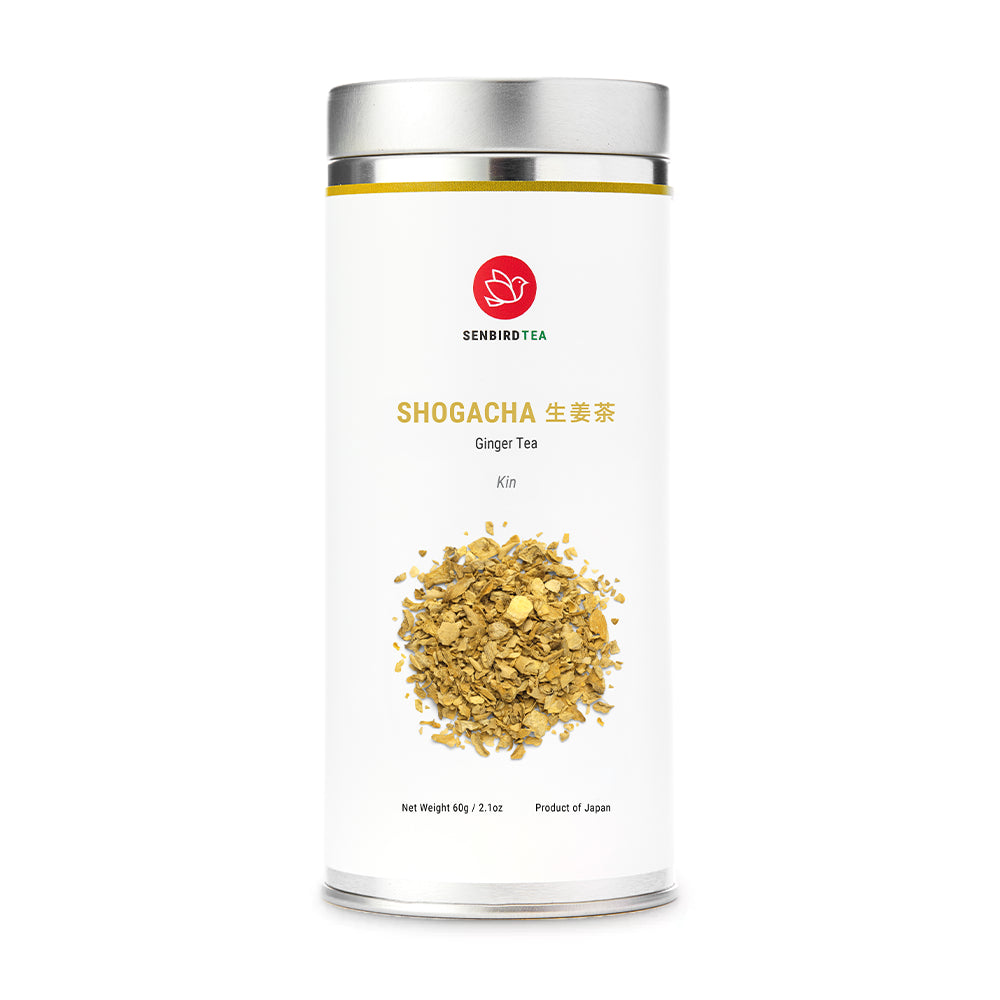
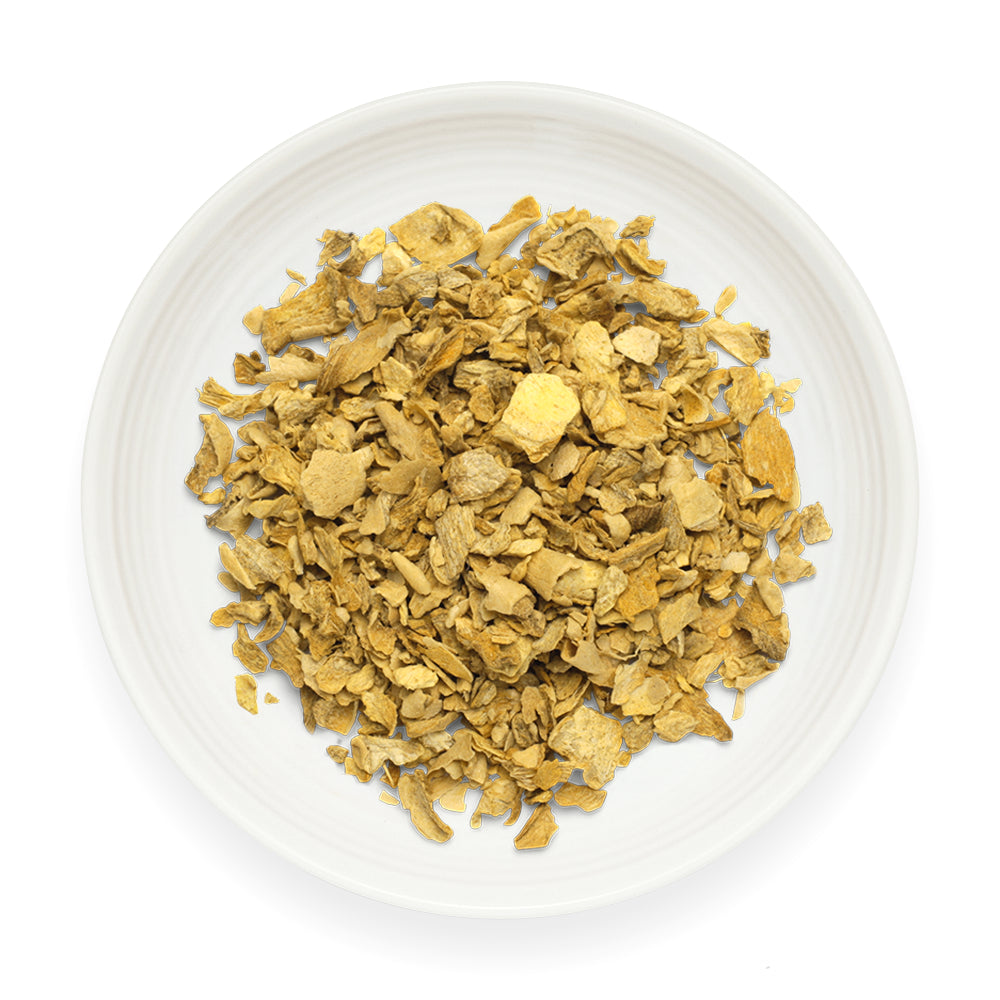
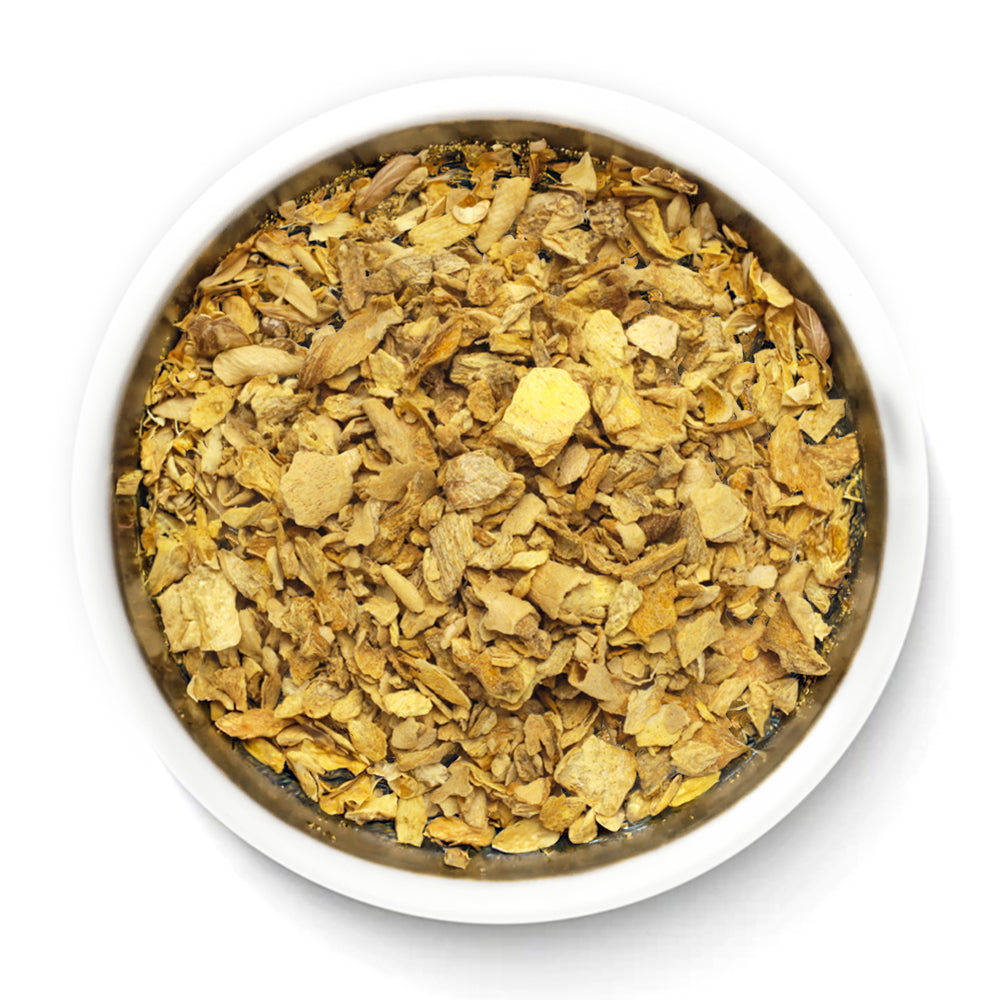
Senbird Tea's Shogacha Kin Japanese Ginger Tea makes the process simple because it uses whole dried ginger root from Kochi Prefecture. Instead of grating fresh ginger each time, you steep the dried root like a loose leaf herbal tea until the cup turns golden, spicy, and naturally warming.
This guide shows one base method, then four easy variations: hot Japanese ginger tea, iced Japanese ginger tea, ginger tea with honey, and ginger tea with lemon. Start with the base cup first, then adjust the strength, sweetness, and citrus to fit the moment.

The simplest Japanese ginger tea recipe begins with ginger and hot water. From there, you can serve it straight, chill it over ice, stir in honey, or brighten it with lemon. Shogacha Kin is bold by nature, so small adjustments make a noticeable difference.
| Ingredient | Amount | Notes |
|---|---|---|
| Shogacha Kin | 2 teaspoons, about 2g | Use a little more for a stronger ginger bite |
| Water | 1 cup, 8oz | Freshly boiled water draws out dried ginger's aroma |
| Steep time | 5 minutes | Steep longer for deeper heat, shorter for a cleaner cup |
| Optional additions | Honey, lemon, yuzu, or ice | Add after steeping so the ginger stays clear and balanced |
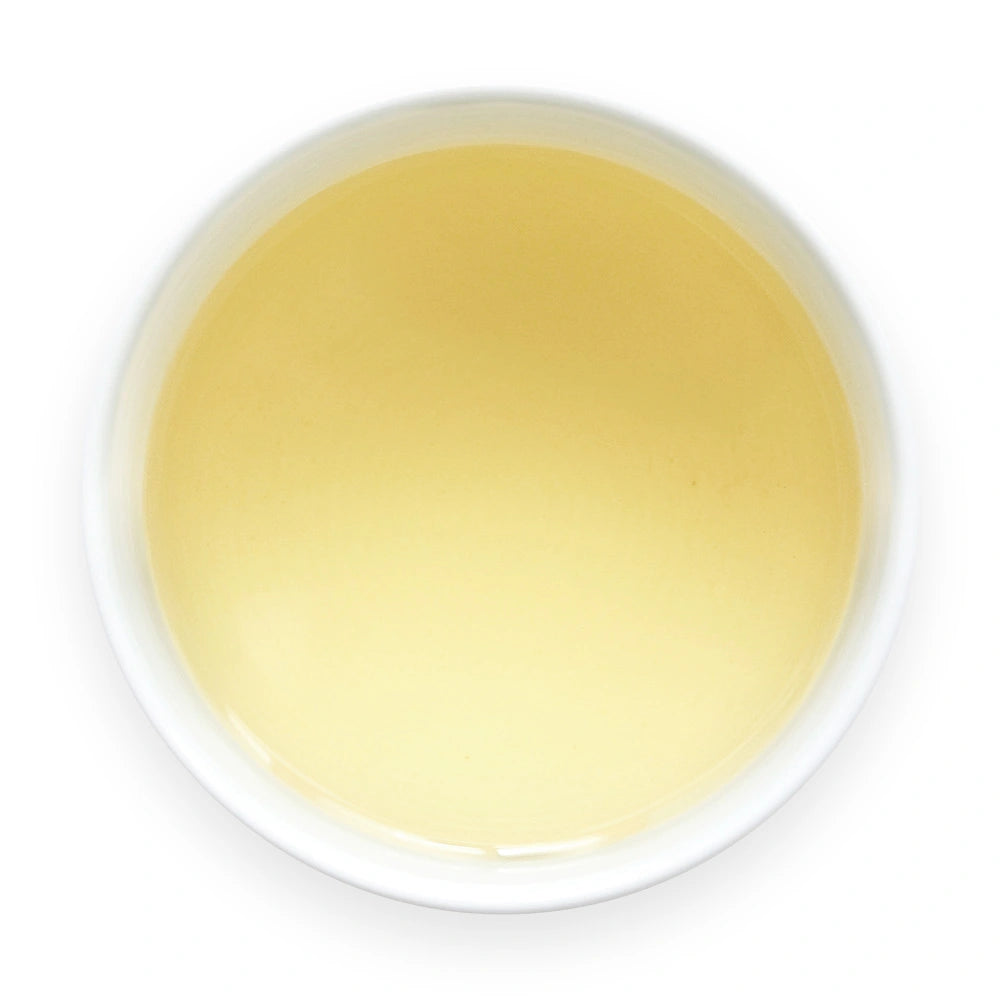
Hot shogacha is the most direct preparation. The aroma rises with the steam, the color deepens to warm amber, and the finish feels earthy, spicy, and clean.
For iced ginger tea, brew a little stronger because ice softens the flavor. A cold brew tea bottle also works well for chilling a larger batch after the ginger has been steeped hot and strained.
Honey softens ginger's heat and gives the cup a rounder finish. Stir in 1 to 2 teaspoons of honey after steeping and straining. If the tea is very hot, let it cool for a moment before adding honey so the sweetness stays delicate rather than flat.
Lemon makes ginger tea brighter, cleaner, and more refreshing. Add 1 to 2 teaspoons of fresh lemon juice after steeping, then taste before adding more. Too much lemon can overtake the ginger, so begin lightly and build from there.

Japanese ginger tea can be made with fresh ginger, dried ginger, honey, sugar, lemon, yuzu, or a light starch for extra body. For a clean daily cup, dried ginger root is especially convenient because it stores well and steeps easily.
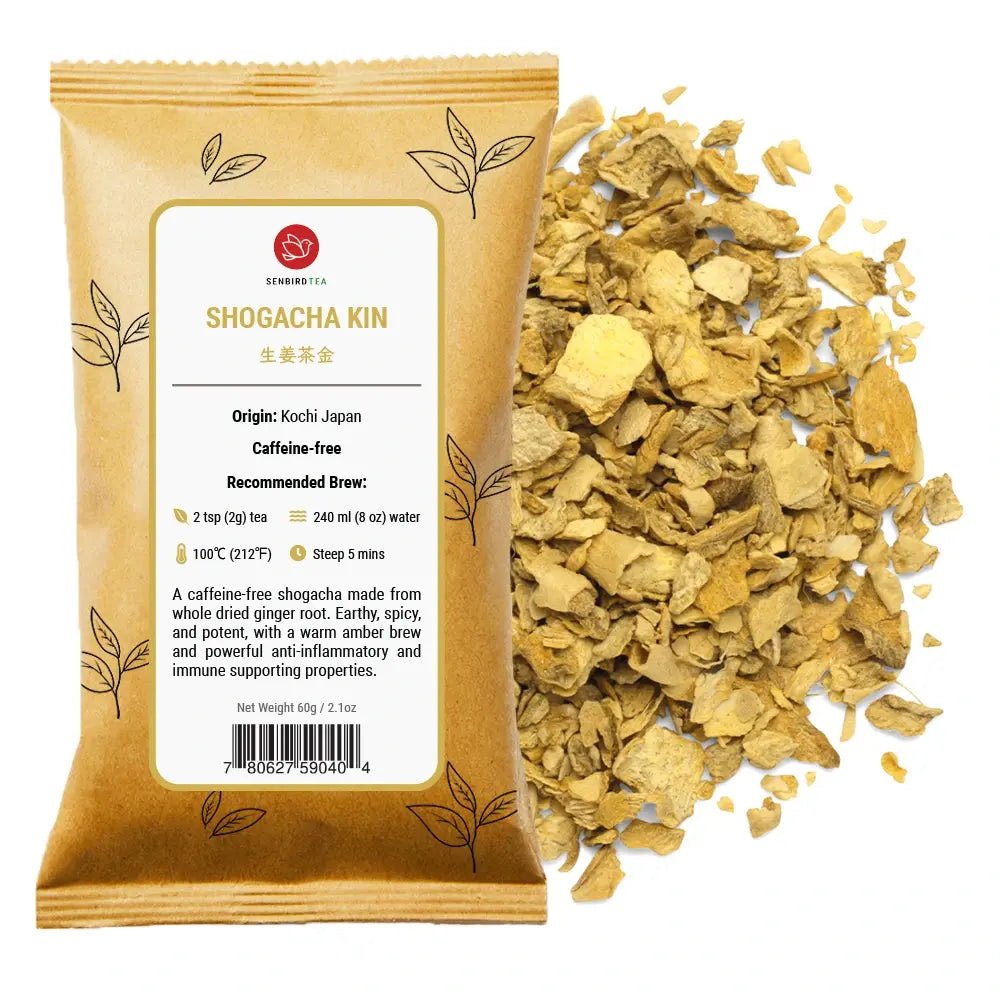
Shogacha Kin is made from whole dried ginger root sourced from Kochi Prefecture, Japan's leading ginger-growing region. The flavor is earthy, spicy, and potent, with a citrus-like lift and warm amber color.
If you want to compare formats, the Shogacha ginger tea collection is the dedicated place for Senbird Tea's Japanese ginger tea offerings.
A small teapot or open infuser gives dried ginger room to release its aroma. Senbird Tea's Japanese teaware collection includes simple tools that make this kind of loose root infusion easier to prepare.

Whole dried ginger root needs hot water and a few quiet minutes. The pieces are firmer than grated fresh ginger, so the steep should be strong enough to draw out aroma, color, and spice.
Use 212 F water and steep for 5 minutes as a starting point. If the cup tastes too gentle, steep for 7 minutes next time. If it feels too sharp, use the same amount of ginger and shorten the steep to 3 or 4 minutes.
A balanced cup should feel warming, aromatic, and clean. It should not feel harsh or painfully spicy. Good shogacha has a natural bite, but the finish should invite another sip.
Because Shogacha Kin is potent, the best way to adjust strength is gradual. Change one thing at a time: tea amount, steep time, or optional additions. This keeps the cup easy to repeat.
You can re-steep Shogacha Kin once, especially if the first infusion was short. The second cup will usually be softer and lighter, with less heat and a gentler aroma. Use freshly boiled water again and steep a little longer than the first cup.

Honey and lemon are helpful because they change the shape of the cup without hiding the ginger. Honey rounds the edges. Lemon lifts the aroma. Together, they create a brighter, more familiar ginger tea.
Dilute it with a splash of hot water, shorten the next steep, or add a small spoon of honey. Ginger's heat builds as it steeps, so strong cups are easy to soften.
Steep longer, use a little more ginger, or cover the cup while brewing. Covering helps hold the aromatic steam that makes Japanese ginger tea feel fuller and more fragrant.
Add lemon after steeping, not before. Start with a small squeeze, then taste. A little citrus can make the ginger feel clear and refreshing, but too much can make the cup sour.
For a wider caffeine-free routine, Senbird Tea's Japanese herbal tea collection includes roasted barley, buckwheat, black soybean, brown rice, and ginger root teas.

Japanese ginger tea is flexible because it works as a quiet daily cup and as a recipe base. Serve it plain after meals, sweetened in the evening, or iced with lemon when you want ginger's heat in a lighter format.
Shogacha can also be brewed stronger and used as a base for syrups, mocktails, warm toddy-style drinks, or simple dessert pairings. Keep the ginger clear at the center, then let sweetness or citrus support it.
If this becomes a regular kitchen staple, the family-size bulk option keeps more dried ginger root on hand for repeat hot cups, iced batches, and honey-lemon variations.
Japanese ginger tea is often called shogacha or shogayu. Shogacha means ginger tea, while shogayu means ginger hot water. In English, both are commonly understood as Japanese ginger tea.
For Shogacha Kin, start with 2 teaspoons, about 2g, for 1 cup or 8oz of freshly boiled water. Steep for 5 minutes, then adjust future cups to taste.
Yes. Brew Japanese ginger tea hot first, slightly stronger than usual, then strain and pour it over ice. Add lemon or honey after steeping if desired.
Add honey after steeping and straining. This keeps the ginger infusion clear and lets you control sweetness cup by cup.
Pure ginger tea is naturally caffeine-free because it is made from ginger root rather than green tea or black tea leaves. Always check blends if other tea leaves are included.
This recipe article does not focus on health benefits, so a medical disclaimer is not recommended. If the article shifts toward digestion, nausea, inflammation, or treatment claims, the disclaimer should be added and the language should be reviewed.
生姜茶金
A caffeine-free Japanese ginger tea made from whole dried ginger root, with an earthy, spicy flavor and a warming amber brew.