Ginger tea benefits often feel simple and practical: a calmer stomach, a warmer body, and a soothing cup when you feel unsettled. In Japan, this comforting ginger drink is known as shogacha or shōgayu. This caffeine-free herbal tea is loved for its bright heat and deeply warming character.
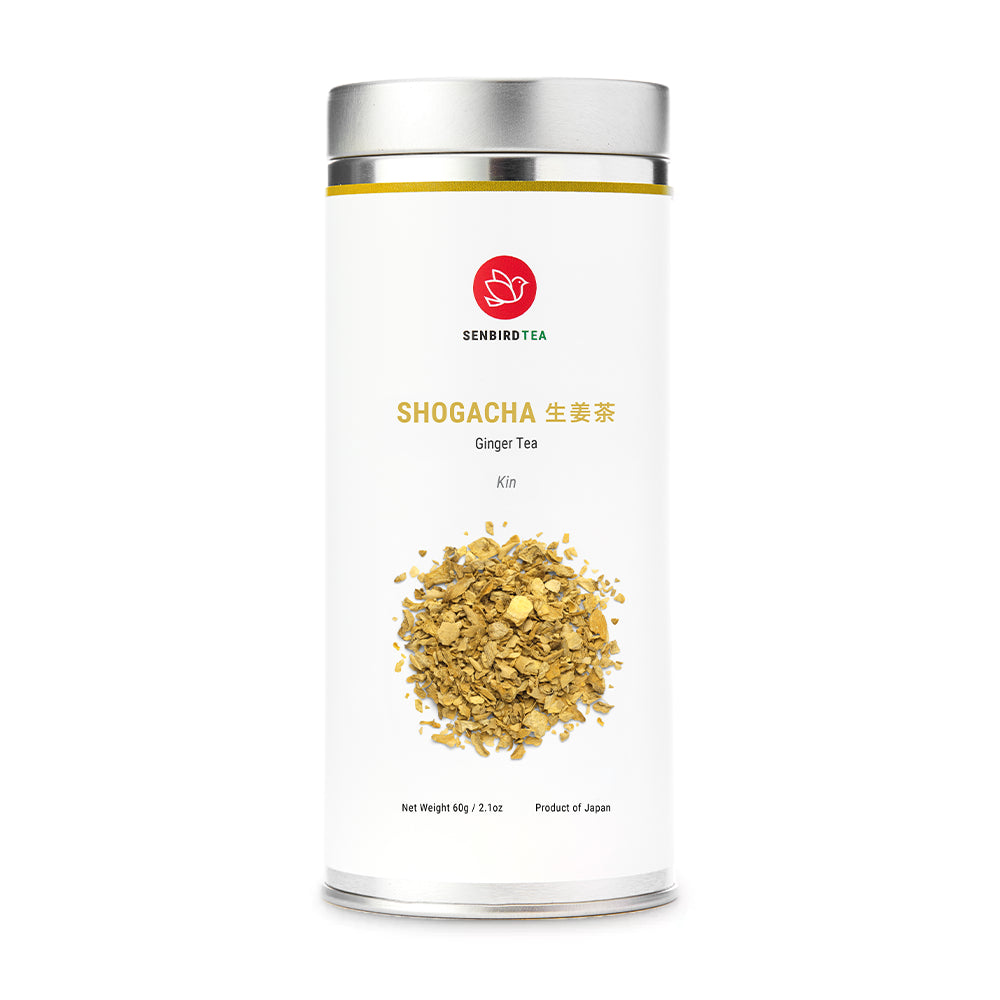
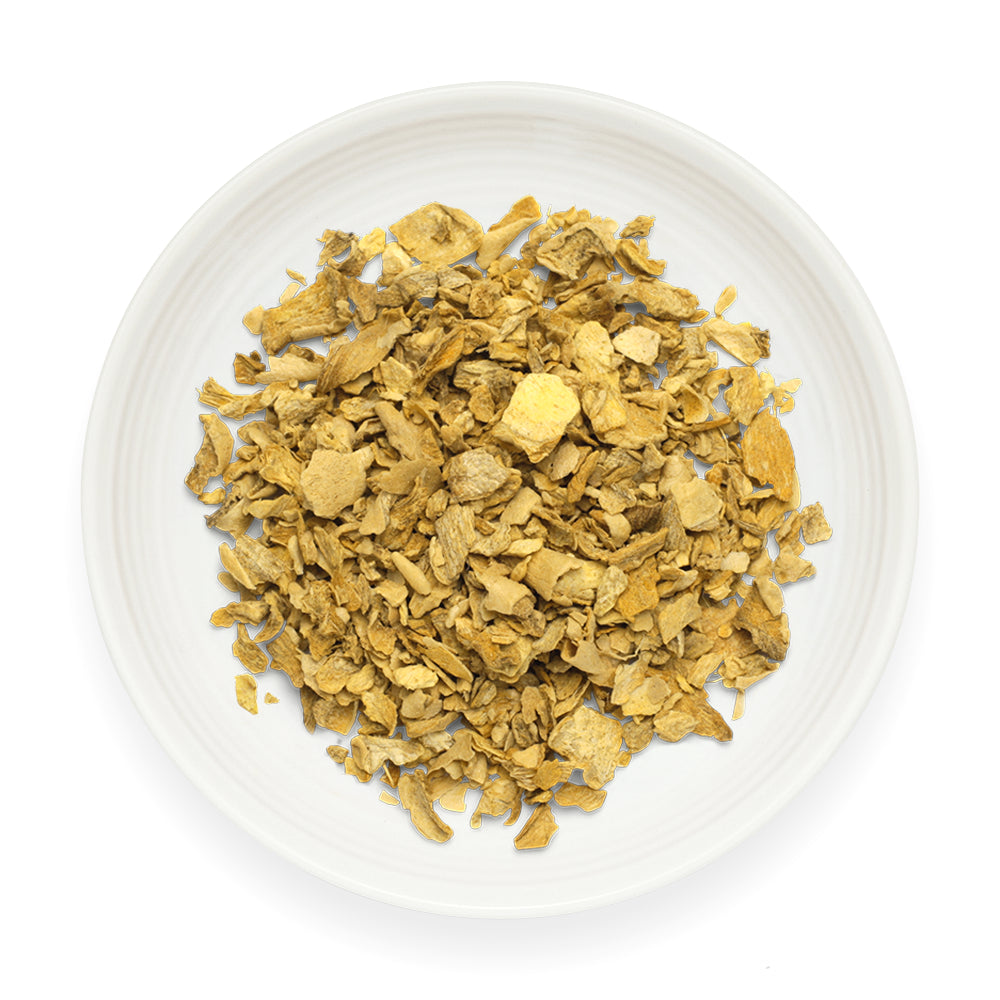
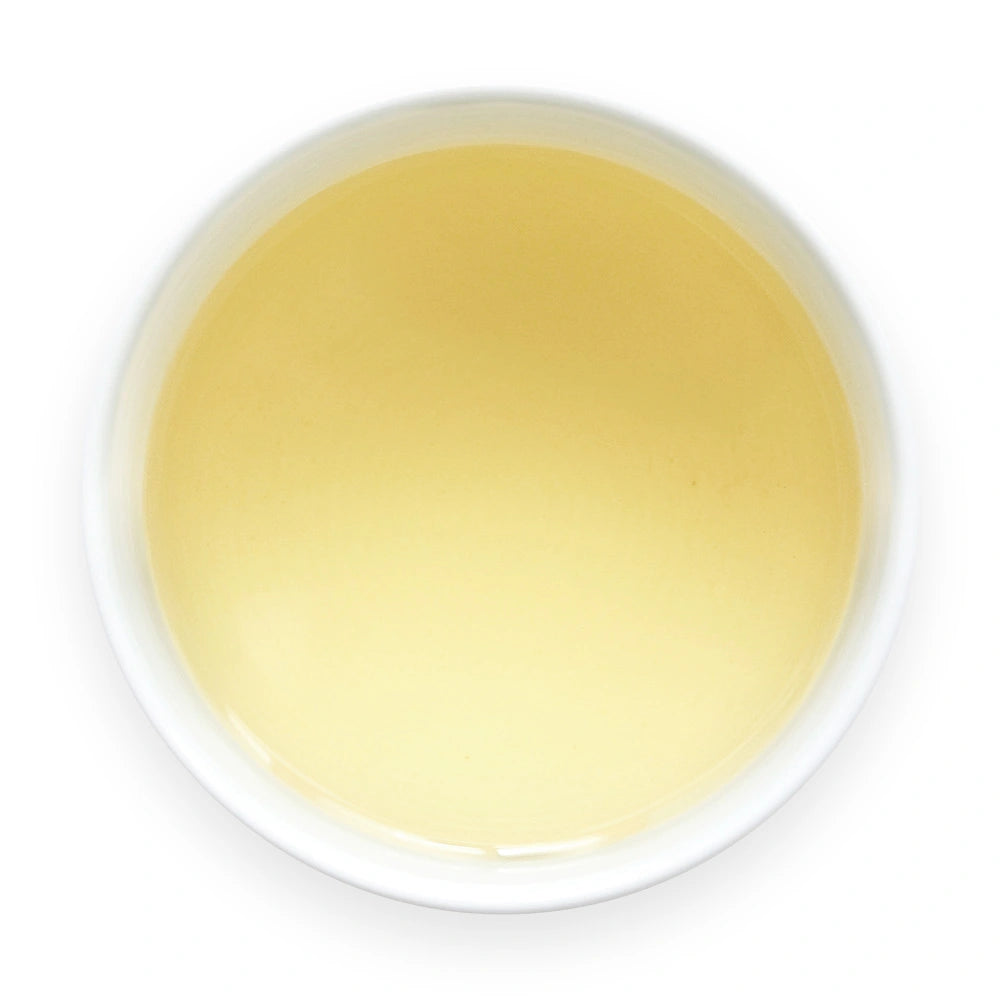
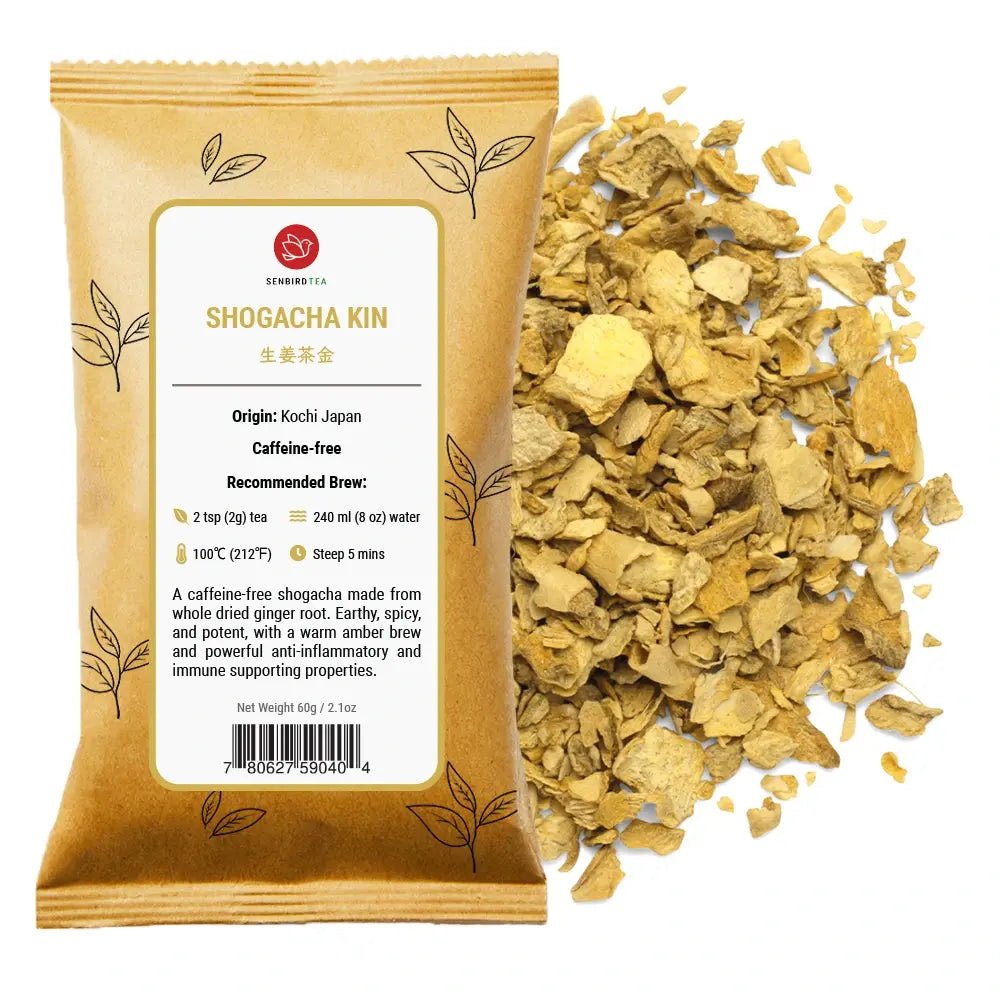
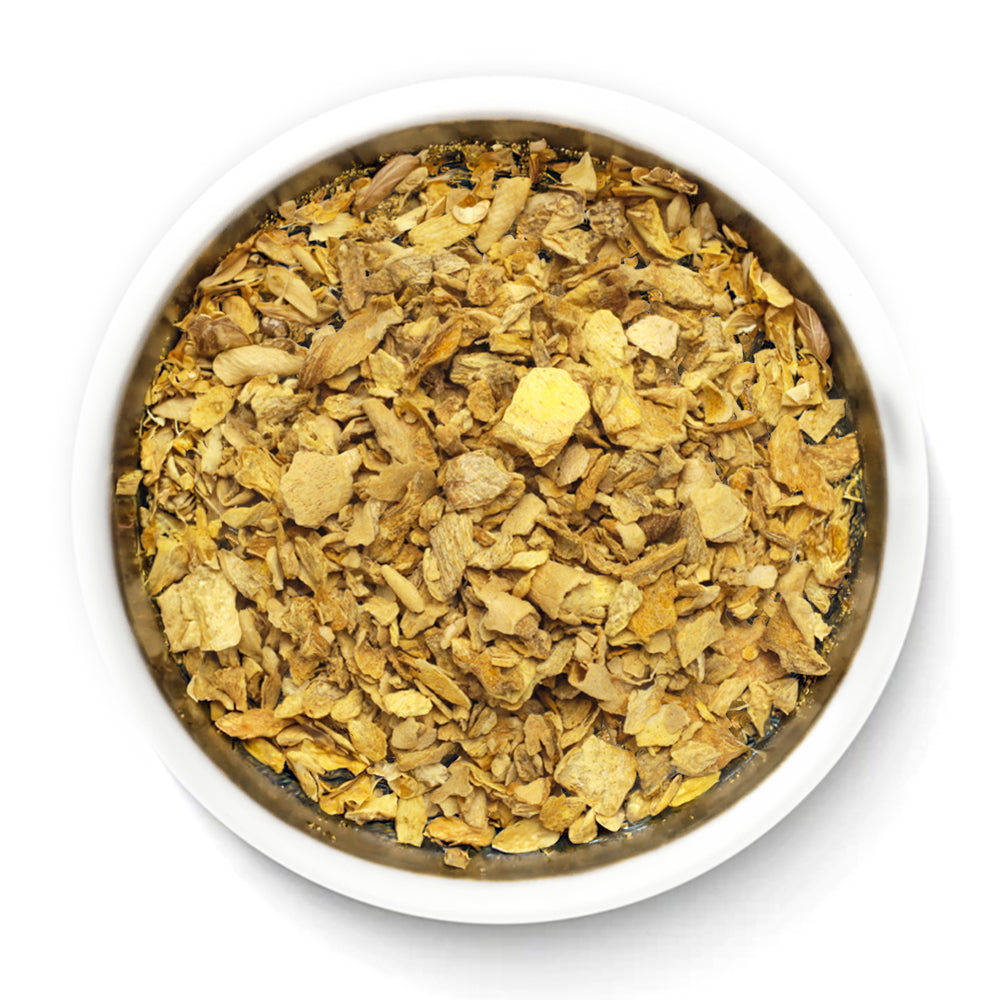
Shogacha Kin draws from that Japanese ginger tea tradition. It uses whole dried ginger root from Kochi Prefecture. The cup brews warm amber, with earthy spice and a clean, caffeine-free finish.
This article is for educational and informational purposes only. It is not medical advice and should not replace professional medical advice, diagnosis, or treatment. Always consult your physician or another qualified healthcare provider with questions about a medical condition. Please also ask before changing your diet or wellness routine.

Shogacha is Japanese ginger tea. The word comes from shoga, meaning ginger, and cha, meaning tea. A closely related home-style name is shōgayu, or “ginger hot water.” Many recipes steep grated ginger in hot water with honey, sugar, yuzu, or a light starch for extra warmth and body.
Unlike green tea or black tea, pure ginger tea does not come from the Camellia sinensis tea plant. It is an herbal infusion made from ginger root, so it is naturally caffeine-free. That makes shogacha a gentle choice for evening routines, cold days, or post-meal sipping.
If you are comparing shogacha benefits with general ginger tea benefits, the overlap is simple: both center on ginger’s warmth, spice, digestive comfort, and traditional use as a soothing herbal drink.
In Japan, ginger drinks are closely tied to seasonal comfort. Families often prepare them during cold months, or when someone wants something spicy and soothing. Senbird Tea’s Shogacha Kin Japanese Ginger Tea brings that familiar idea into a simple loose root infusion: whole dried ginger from Kochi Prefecture.

One of the most searched ginger tea benefits is digestion support. People have long used ginger for occasional stomach discomfort. Modern research often focuses on gingerols and shogaols, ginger’s naturally occurring compounds that may support normal digestive movement.
For many tea drinkers, the experience feels practical. A cup of ginger tea after a meal can feel warm, settling, and clear. The gentle heat encourages slower sipping. In addition, the spicy aroma feels grounding after heavy, rich, or cold foods.
If your goal is everyday digestive comfort, try drinking Japanese ginger tea after meals rather than rushing through it. Brew it hot, sip slowly, and notice how the warmth, spice, and steam work together as part of the ritual.

Ginger’s warming sensation is one reason shogacha remains beloved in Japanese home wellness. The heat is not only from the water temperature. Instead, ginger has a spicy, invigorating character that lingers gently in the throat and chest.
This is why shogacha feels fitting in colder seasons, after rain, or during quiet evenings. A caffeine-free cup offers the comfort of a hot drink without the alertness of green tea, black tea, or coffee.
For a broader caffeine-free ritual, explore Senbird Tea’s Shogacha ginger tea collection, which centers on warming, caffeine-free Japanese ginger tea.

Ginger is widely known for nausea support. People often use it for occasional nausea related to motion, pregnancy, or general stomach unease. Research looks strongest for certain forms of nausea, though results vary by person, dose, and situation.
For tea drinkers, ginger tea offers a gentle way to enjoy ginger in a warm ritual. It is not a replacement for medical care. Anyone who is pregnant, receiving medical treatment, or managing ongoing nausea should speak with a qualified healthcare provider before relying on ginger.
Still, when the moment calls for something simple and soothing, a cup of shogacha can be a comforting place to begin: warm water, ginger’s clean spice, and a few quiet minutes to settle.

Ginger contains naturally occurring plant compounds, including gingerols and shogaols. Researchers often study these compounds for antioxidant and anti-inflammatory activity. They also contribute to ginger’s sharp aroma, warming flavor, and long-standing role in herbal wellness traditions.
Balance matters here. Ginger tea is not a cure for inflammation-related conditions, and tea is only one part of a broader lifestyle. Even so, it can bring ginger’s beneficial compounds into a simple, caffeine-free daily drink.
Shogacha Kin is designed for this kind of steady ritual: pure whole dried ginger root, a potent amber brew, and a warming finish that feels clear rather than heavy.

Pure ginger tea is naturally caffeine-free because it comes from ginger root, not tea leaves. This makes it useful later in the day. In addition, it fits well into a low-caffeine tea routine.
That caffeine-free quality gives shogacha a different role from sencha, matcha, gyokuro, or wakoucha. Those teas offer their own beautiful benefits. By contrast, ginger tea belongs in the herbal category: bold, spicy, and caffeine-free by nature.
If you enjoy caffeine-free Japanese teas, you may also like the roasted depth of Mugicha Itsuki barley herbal tea.
For an earthier cup, buckwheat herbal tea offers a toasty aroma and a naturally caffeine-free finish.
For a gentler, softly sweet infusion, Kuromamecha Yui black soybean tea brings roasted black soybean depth to a calm daily ritual.

In Japanese home cooking, families often prepare shōgayu during cold season. As a result, it feels warming, aromatic, and comforting to the throat. Warm drinks can help maintain hydration and may feel soothing when the air is dry or the body feels chilled.
Some Japanese shōgayu recipes add honey, lemon, yuzu, or a small amount of potato starch. These additions can create a thicker texture that holds heat longer. Shogacha Kin keeps the foundation simple, so you can enjoy it straight or add honey or citrus.
For a larger pantry-friendly format, Senbird Tea’s Shogacha Kin Family Size keeps the same whole dried ginger root ready for frequent cold-weather brewing.
For the most comforting cup, brew it hot and cover the tea while steeping. This helps hold in the aromatic steam that makes ginger tea feel so restorative.

Not every benefit has to be clinical to matter. A good tea ritual changes the pace of the day. Most importantly, ginger tea asks you to slow down and notice each step:
That quiet rhythm is part of why shogacha fits naturally within Japanese tea culture. It is simple, whole, and sensory. The benefit is not only what ginger contains. It is also how the cup invites attentive care.
For an even more intentional preparation, use a small teapot or infuser and give the ginger enough room to fully infuse.

Shogacha Kin uses whole dried ginger root. Brew it hot enough, and long enough, to draw out ginger’s warmth, spice, and amber color.
| Step | Recommendation | Why It Matters |
|---|---|---|
| Tea amount | Start with the package recommendation, then adjust for strength | Ginger can become very potent, so begin balanced and increase gradually |
| Water temperature | Use freshly boiled water | Hot water helps dried ginger root release its full aroma and warmth |
| Steep time | Steep until the liquor becomes warm amber and aromatic | A longer steep creates a deeper, spicier cup |
| Optional additions | Honey, lemon, yuzu, or a splash of warm water for dilution | Sweetness and citrus can soften ginger’s heat while keeping the cup bright |
If you are new to ginger tea, start lighter. If you love ginger’s heat, steep longer or use a little more root. The best cup feels warming, balanced, and easy to return to.

Many people enjoy ginger tea as a common food and herbal infusion. Still, ginger has a naturally spicy character. Some people may prefer a lighter brew, especially if they are sensitive to warming spices or prone to occasional heartburn.
Ask a healthcare provider before using ginger regularly for wellness purposes if you are pregnant or breastfeeding. Also ask if you take prescription medication, are preparing for surgery, or have a condition that affects digestion, blood sugar, blood pressure, or bleeding risk.
For most tea drinkers, shogacha works best as a comforting caffeine-free herbal tea. Enjoy it as warm, aromatic part of a balanced daily ritual, not as a substitute for professional medical care.
Shogacha is Japanese ginger tea. It is made by steeping ginger in hot water, sometimes with honey, sugar, yuzu, lemon, or a light starch for extra body. Shogacha Kin uses whole dried ginger root from Kochi Prefecture.
Yes. Pure ginger tea is naturally caffeine-free because it is made from ginger root rather than tea leaves. This makes it suitable for evening routines and caffeine-sensitive tea drinkers.
The most common ginger tea benefits include digestive comfort, natural warmth, occasional nausea support, antioxidant compounds, and caffeine-free sipping. Seasonal comfort and a grounding daily ritual matter, too. These are also the main shogacha benefits people look for when researching Japanese ginger tea.
Researchers have studied ginger for several types of nausea. Evidence is strongest in certain situations, such as pregnancy-related nausea. However, ginger is not a cure. People who are pregnant, receiving treatment, or managing ongoing symptoms should consult a healthcare provider.
Many people enjoy ginger tea daily in normal food-like amounts. Start with one cup and see how your body responds. If you take medication, are pregnant or breastfeeding, or have a medical condition, ask a healthcare provider before using ginger regularly.
Enjoy ginger tea after meals for digestive comfort, on cold days for warmth, or in the evening because it is naturally caffeine-free. Avoid brewing it too strong or too late if ginger’s spice feels stimulating to you.
Shogacha Kin tastes earthy, spicy, and potent, with a warm amber brew and a clean ginger finish. Because it uses whole dried ginger root, the flavor becomes stronger with longer steeping.
生姜茶金
A caffeine-free Japanese ginger tea made from whole dried ginger root, with an earthy, spicy flavor and a warming amber brew.