Hojicha powder and hojicha loose leaf are two forms of the same beloved Japanese roasted green tea, but they offer distinctly different experiences in taste, texture, preparation, and culinary application. Hojicha powder delivers concentrated, bold roasted flavor and dissolves completely into beverages and recipes, while loose-leaf hojicha produces a lighter, more nuanced cup through traditional steeping. Understanding these differences helps you choose the right form of Senbird Tea hojicha for every occasion, whether you are making a comforting cup of tea or baking an elegant dessert.

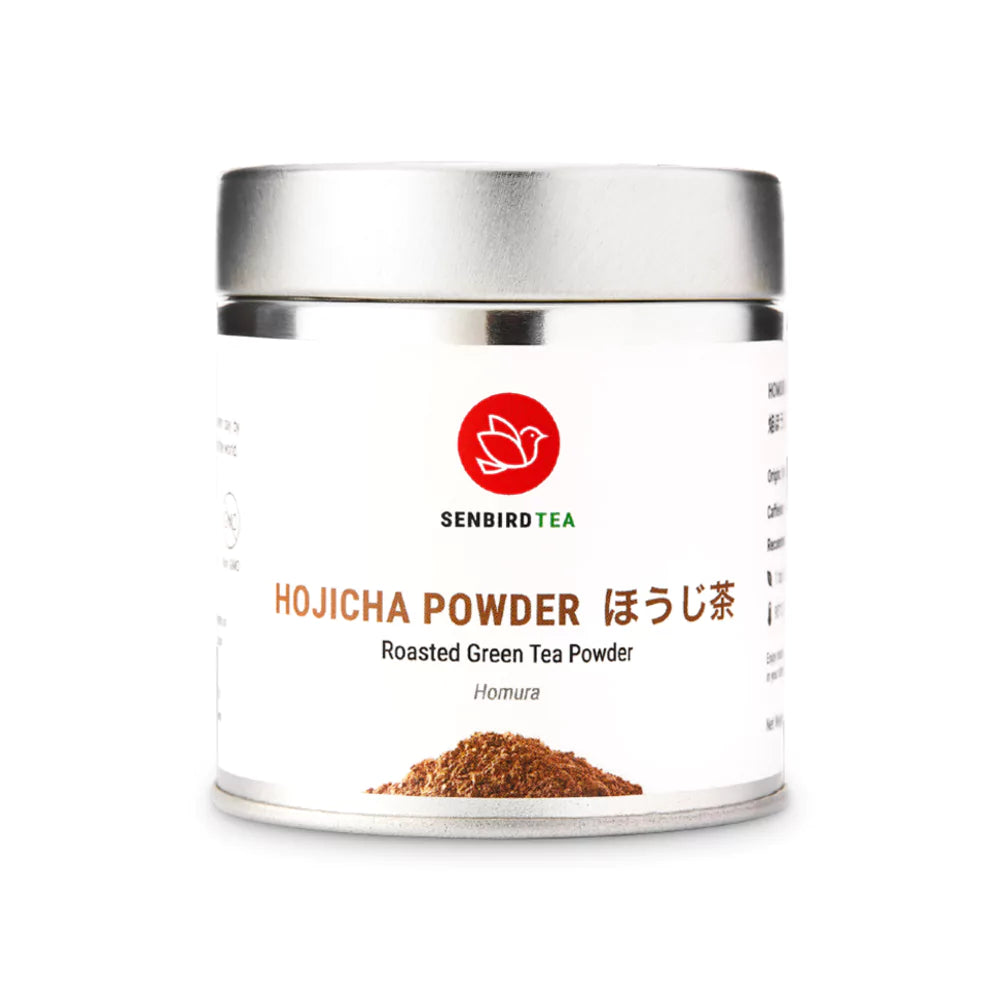
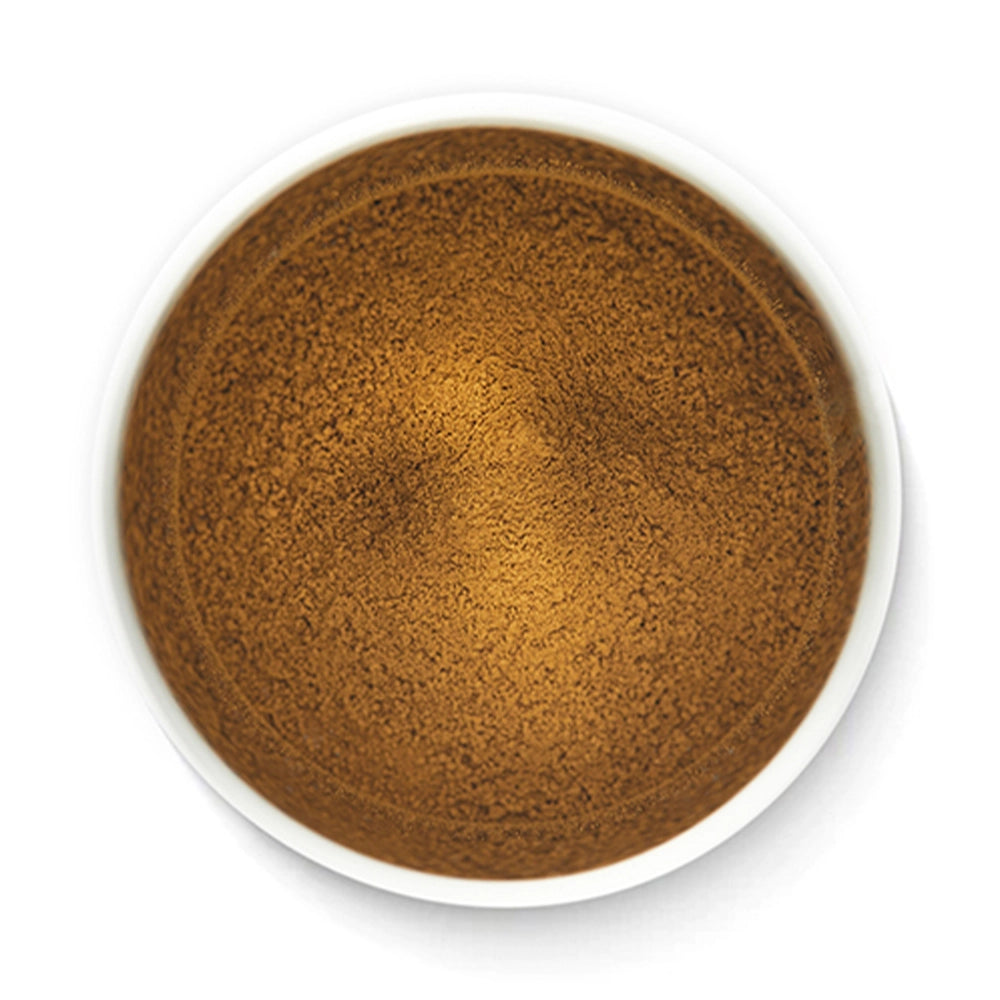
Hojicha powder is made by finely grinding roasted green tea leaves into a silky powder, similar to how matcha is produced from unroasted tea leaves. When you use hojicha powder, you consume the entire tea leaf rather than steeping and discarding the leaves, which means you ingest all the compounds present in the leaf including fiber, chlorophyll remnants, and fat-soluble nutrients that do not fully extract into brewed tea. Senbird Tea hojicha powder is milled to a fine consistency that dissolves smoothly in both hot and cold liquids.
Loose-leaf hojicha consists of whole or broken roasted tea leaves that are steeped in hot water, then separated from the liquid before drinking. This infusion method extracts water-soluble compounds like amino acids, catechins, and caffeine while leaving the leaf structure behind. The result is a cleaner, lighter-bodied cup with more subtle flavor nuances than the bolder, more concentrated experience of powder. Both forms from Senbird Tea start with the same high-quality roasted tea, but the processing into powder versus whole leaf creates meaningfully different end products.

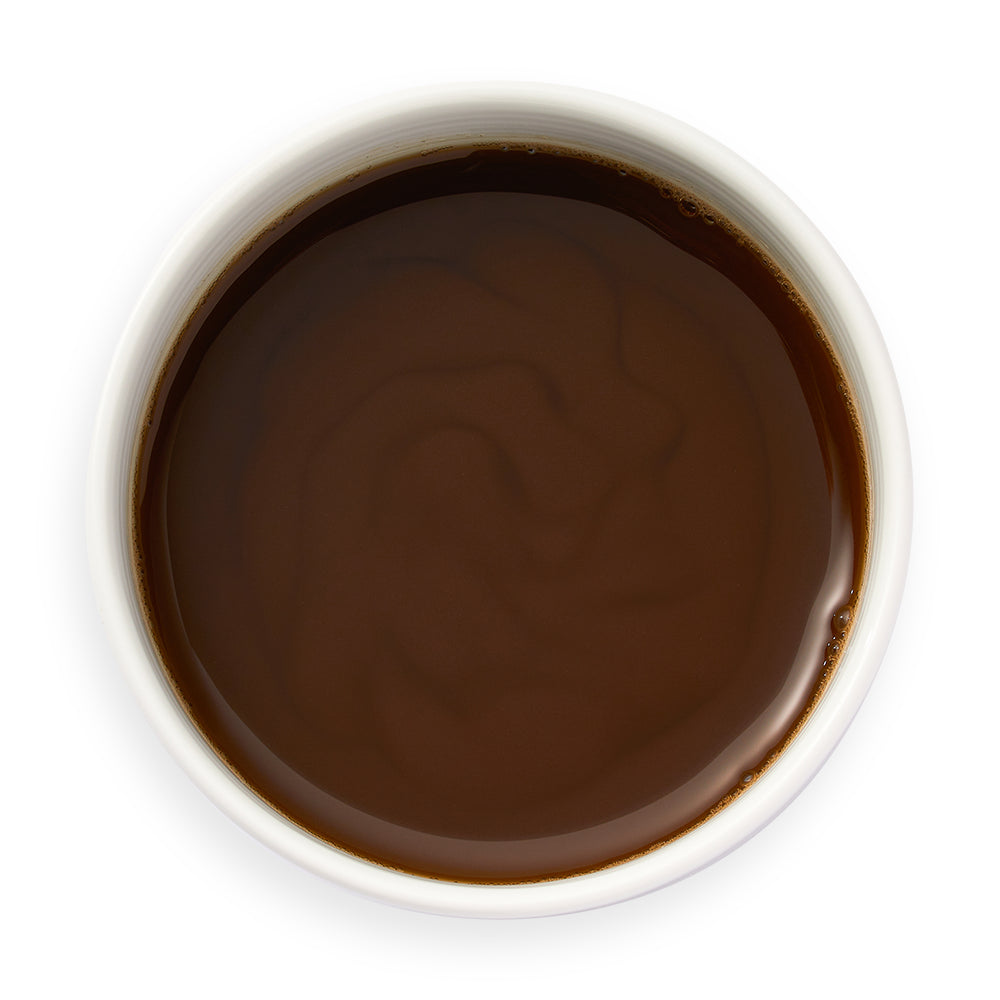
Hojicha powder produces a rich, creamy beverage with an opaque, warm brown color and a concentrated roasted flavor. Because you consume the entire leaf, the taste is bolder and more intense, with pronounced caramel, toasted grain, and roasted nut notes. The texture has a slight body and creaminess even without added milk, similar to how matcha has a richer mouthfeel than brewed green tea. Senbird Tea hojicha powder is ideal when you want maximum roasted flavor impact in the most concentrated form.
Loose-leaf hojicha brews into a clear, amber-to-reddish-brown liquor with a lighter body and more delicate flavor profile. The steeping process naturally filters out heavier compounds, producing a cup that is clean, smooth, and subtly sweet with gentle roasted notes. Many tea enthusiasts appreciate loose-leaf hojicha from Senbird Tea for its refreshing drinkability and the way successive infusions reveal different flavor dimensions, with the first steep offering brighter roasted notes and the second bringing out sweeter, more mellow character.

Sift 1 to 2 teaspoons of Senbird Tea's Hojicha Homura powder into a cup or bowl to break up any clumps. Add 2 to 3 tablespoons of hot water at around 175 degrees Fahrenheit and whisk with a bamboo chasen or small whisk until a smooth paste forms. Then add 6 to 8 ounces of hot water or steamed milk and stir to combine. For iced hojicha lattes, dissolve the powder in a small amount of hot water first, then pour over ice and cold milk. The entire preparation takes under 2 minutes and produces a rich, flavorful beverage every time.
Add 1 tablespoon of Senbird Tea loose-leaf hojicha to a teapot or infuser. Pour 8 ounces of water heated to 200 to 212 degrees Fahrenheit directly over the leaves. Hojicha is one of the few Japanese green teas that can handle boiling water without developing excessive bitterness, thanks to the roasting process that has already modified the catechins. Steep for 30 seconds to 1 minute for the first infusion, and resteep the same leaves 2 to 3 additional times with slightly longer steeping. Each infusion will reveal a slightly different dimension of the roasted flavor.

Hojicha powder excels in applications where you want the roasted tea flavor to be a primary ingredient that fully integrates into the preparation. This includes lattes and blended drinks where the powder dissolves completely, baking recipes like cookies, cakes, and ice cream where it distributes evenly throughout the batter, and quick single-serving preparations where convenience matters. Senbird Tea hojicha powder is the preferred choice for all culinary applications because the fine powder incorporates seamlessly into any recipe.
Loose-leaf hojicha is the better choice for traditional tea drinking, meditation and mindful tea sessions, and situations where you want a lighter, cleaner cup to enjoy on its own. The ritual of steeping loose-leaf tea has its own meditative quality that powder preparation cannot replicate. Loose-leaf hojicha from Senbird Tea also offers the advantage of multiple infusions from a single portion, making it more economical for daily drinking habits where you brew several cups throughout the day.

Many Senbird Tea customers find that keeping both hojicha powder and loose-leaf hojicha in their collection provides the greatest versatility. Powder serves as your go-to for lattes, smoothies, baking, and quick preparations, while loose leaf becomes the centerpiece of more contemplative tea sessions and traditional brewing. If you are new to hojicha and want to start with one form, consider your primary intended use: choose powder if you plan to make lattes and bake with it, or choose loose leaf if you want to enjoy hojicha as a brewed tea first.
| Feature | Hojicha Powder | Hojicha Loose Leaf |
|---|---|---|
| Flavor intensity | Bold, concentrated | Subtle, nuanced |
| Texture | Creamy, opaque | Clear, light-bodied |
| Preparation time | Under 2 minutes | 1-3 minutes per steep |
| Multiple infusions | No (single use) | Yes (2-3 steeps) |
| Best for drinking | Lattes, blended drinks | Traditional hot tea |
| Best for cooking | Baking, ice cream, sauces | Infusing broths, syrups |
| Nutrient intake | Whole leaf consumed | Water-soluble compounds only |
| Water temperature | 175°F for dissolving | 200-212°F for steeping |
Hojicha powder delivers slightly more caffeine per serving than brewed loose-leaf hojicha because you consume the entire leaf rather than just the water-soluble extract. However, both forms remain among the lowest-caffeine Japanese teas available. A cup of hojicha powder from Senbird Tea contains approximately 15 to 25 milligrams of caffeine, while brewed loose-leaf hojicha contains approximately 7 to 15 milligrams per cup. Both amounts are significantly less than sencha, matcha, or coffee, making either form of hojicha suitable for afternoon and evening consumption.
You can substitute hojicha powder for matcha powder in most recipes at a 1-to-1 ratio, but the flavor and color will be completely different. Matcha produces a vivid green color with grassy, umami-rich flavor, while hojicha powder creates a warm brown color with toasty, caramel-like notes. Both dissolve similarly into liquids and batters, making the substitution technically straightforward. Senbird Tea customers who enjoy both often discover that some recipes work better with one versus the other, so experimenting with both powders in your favorite recipes is encouraged.
Both forms should be stored in airtight containers away from light, heat, and moisture. Hojicha powder is more sensitive to oxidation due to its fine particle size, so it should be sealed tightly after every use and consumed within 2 to 3 months of opening. Loose-leaf hojicha from Senbird Tea is somewhat more forgiving, maintaining good quality for 3 to 6 months after opening when stored properly. The roasting process that creates hojicha actually provides some natural stability compared to unroasted green teas, but both forms still benefit from proper storage practices.
Hojicha powder is excellent for lattes and is one of its most popular applications. The concentrated roasted flavor combines beautifully with both dairy and plant-based milks, creating a warm, comforting beverage with natural sweetness that many people enjoy without any added sugar. To make a hojicha latte with Senbird Tea powder, dissolve 1 to 2 teaspoons of powder in 2 tablespoons of hot water, then add 6 to 8 ounces of steamed or frothed milk. The result is a creamy, aromatic latte with a distinctive roasted character that stands apart from matcha and coffee lattes.
Hojicha powder is the clear winner for baking because it distributes evenly throughout batters and doughs, coloring and flavoring the entire baked good uniformly. Loose-leaf hojicha cannot be effectively incorporated into baked goods without first being ground into powder or used to infuse a liquid component like cream or milk. Senbird Tea hojicha powder works beautifully in cookies, cakes, Swiss rolls, tiramisu, and ice cream. For baking, culinary-grade hojicha powder is recommended over ceremonial-grade, as the flavor difference is minimal in baked applications while the price difference can be significant.
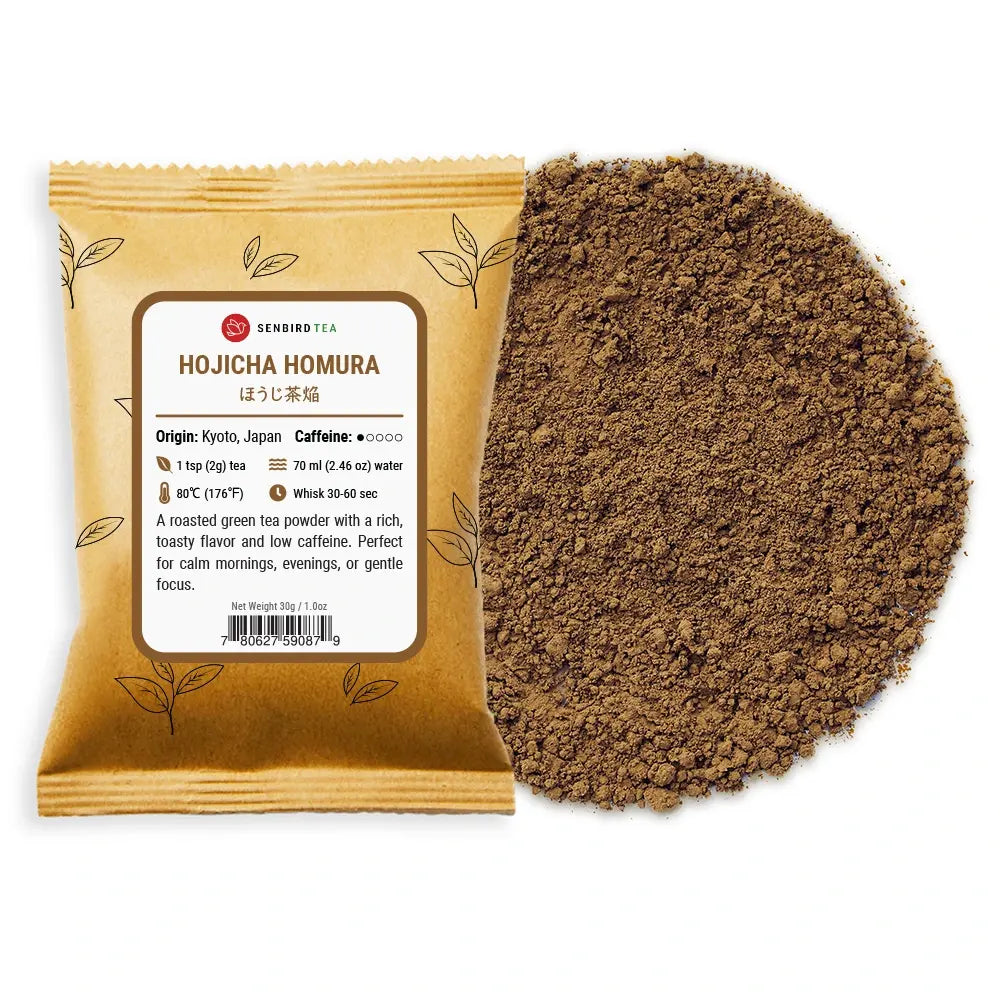
ほうじ茶焔
A roasted green tea powder with a rich, toasty flavor and low caffeine. Perfect for calm mornings, evenings, or gentle focus.