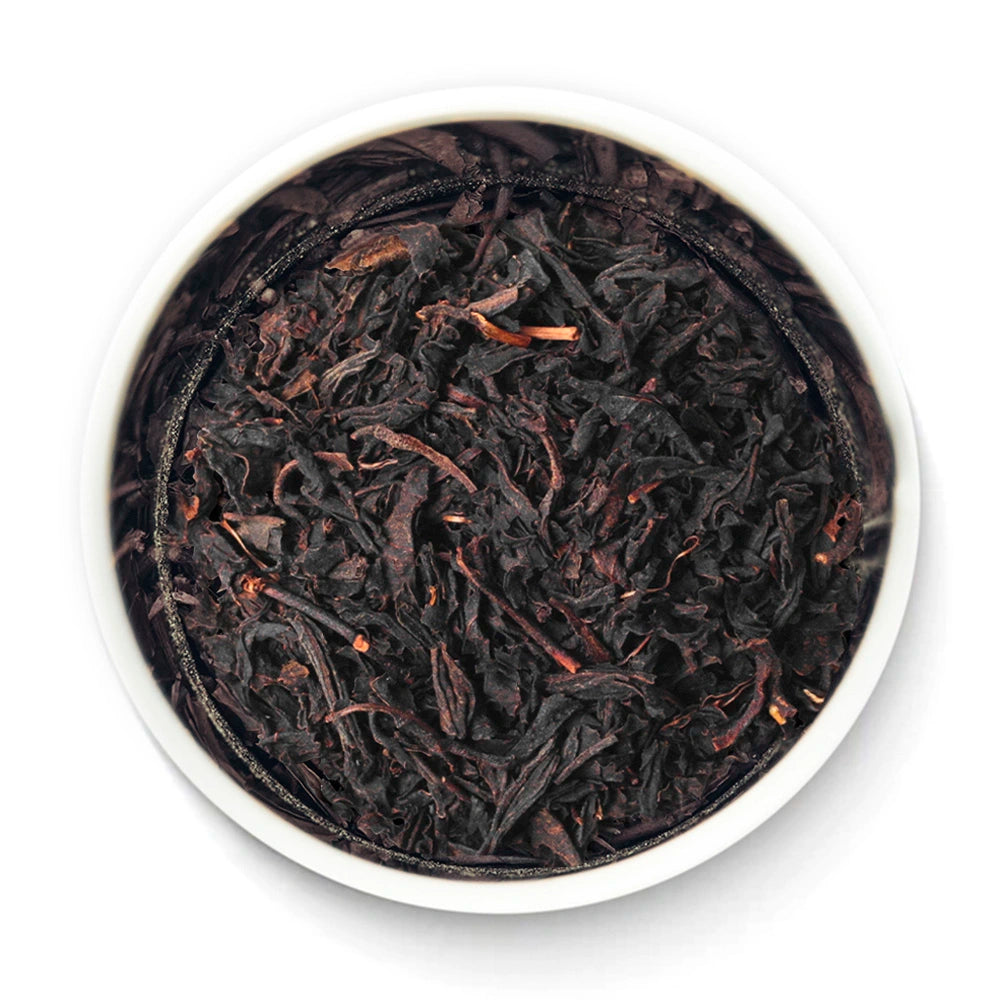
Wakoucha is Japan's unique take on black tea, offering a naturally sweet, gentle, and aromatic experience that stands apart from the bold black teas of India, Sri Lanka, and Africa. Made from Japanese tea cultivars originally bred for green tea production, wakoucha delivers a smooth, low-tannin cup with floral and fruity notes that can be enjoyed without milk or sugar. This beginner's guide from Senbird Tea covers everything you need to know about wakoucha, from its origins and production to brewing techniques and health benefits, so you can confidently explore this increasingly popular category of Japanese tea.

Wakoucha literally translates to "Japanese black tea" in Japanese, with "wa" meaning Japanese and "koucha" meaning black tea. While Japan is overwhelmingly known for green tea production, a small but growing number of Japanese tea artisans have begun crafting exceptional black teas using domestic cultivars like Yabukita, Benifuuki, and other varieties. The result is a black tea category that is distinctly Japanese in character, reflecting the same attention to quality, precision, and terroir that defines Japanese green tea tradition.
Japan's relationship with black tea production dates to the Meiji era of the late 1800s, when the country briefly exported black tea before market conditions shifted focus back to green tea. The modern Wakoucha Honoka renaissance began around 2000 as innovative producers, particularly in Shizuoka, Kagoshima, and Kumamoto prefectures, recognized that Japanese tea cultivars could produce black teas with uniquely appealing flavor profiles. Senbird Tea sources wakoucha from artisan producers who bring generations of Japanese tea expertise to black tea craftsmanship.

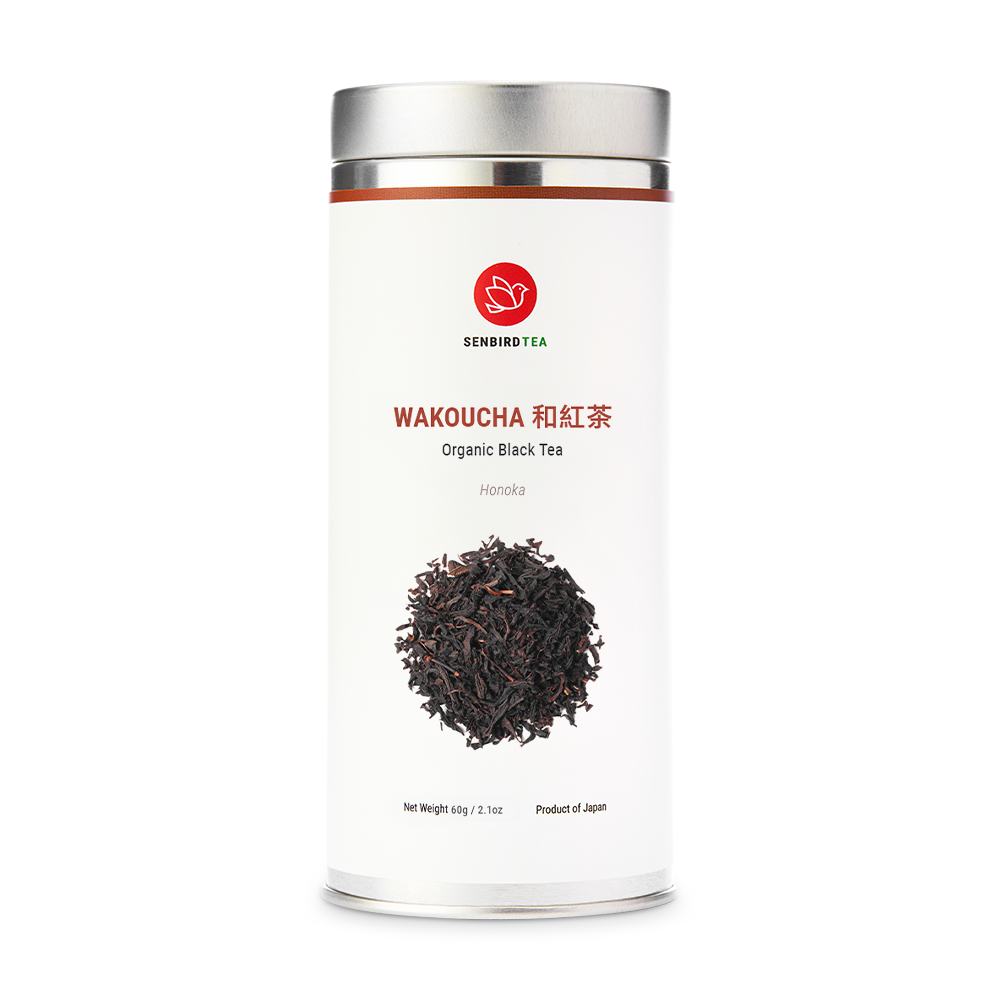
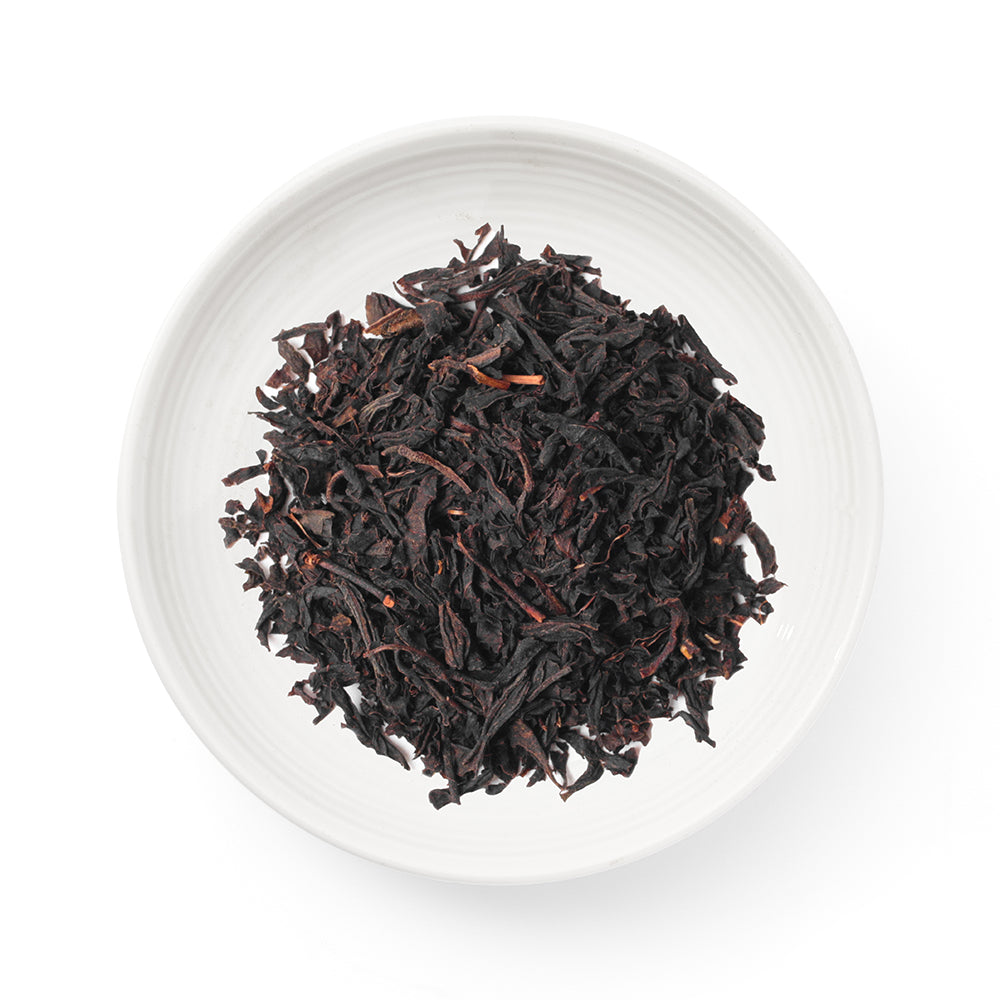
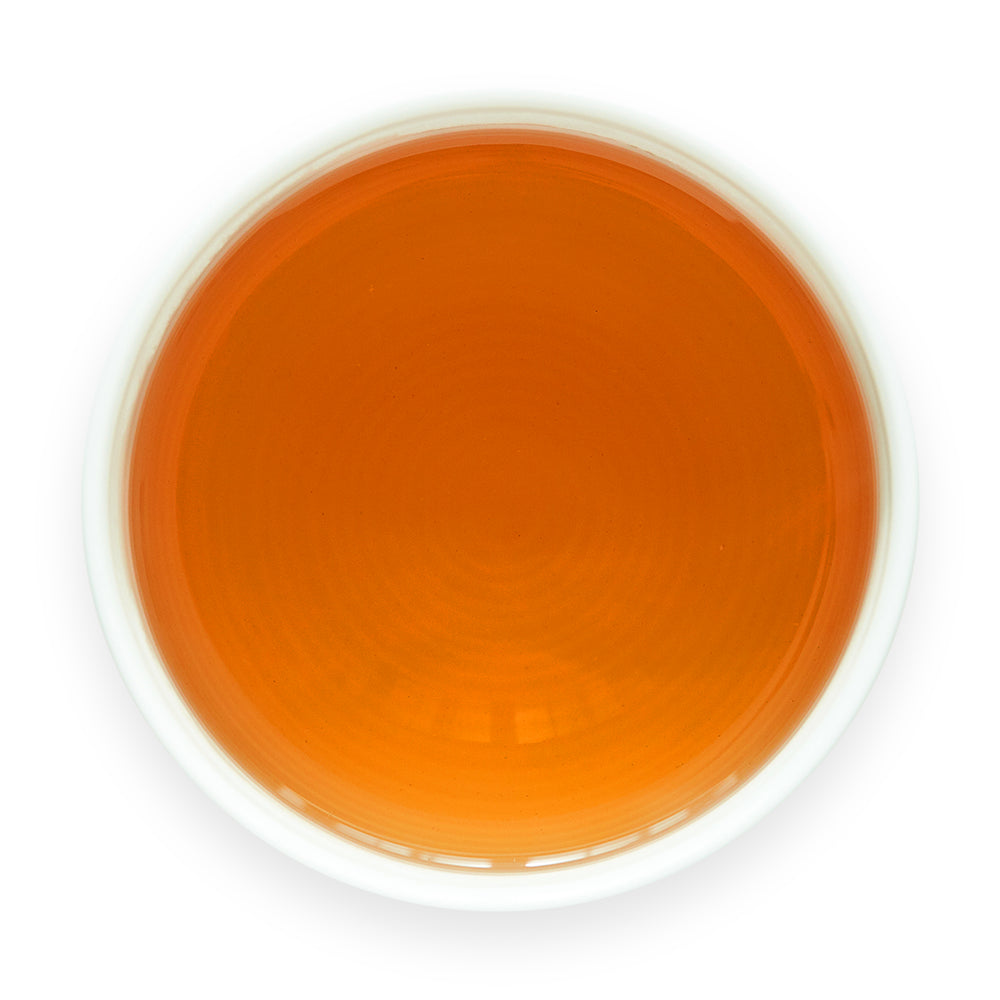
Senbird Tea's Wakoucha Honoka exemplifies the best qualities of Japanese black tea. "Honoka" means "faint" or "gentle glow" in Japanese, perfectly describing this tea's delicate yet complex character. Produced from carefully selected Japanese tea leaves that are fully withered and oxidized using methods refined over decades, Honoka offers a naturally sweet cup with notes of dried stone fruit, honey, and subtle floral undertones. The finish is clean and smooth without the drying astringency common in many Western-style black teas.
What makes Wakoucha Honoka particularly special is its versatility compared to matcha. It brews beautifully hot or cold, pairs well with both Japanese and Western cuisines, and provides a satisfying tea experience for those transitioning from coffee or exploring beyond green tea. The naturally sweet flavor profile means most people enjoy it without any additions, making it a zero-calorie, sugar-free beverage that delivers genuine flavor satisfaction with every cup from Senbird Tea.

Brewing wakoucha is straightforward, but a few key details ensure you experience the full depth of flavor that Japanese black tea offers. For best results, use the same care as when brewing gyokuro. Unlike many Indian and Sri Lankan black teas that require boiling water, wakoucha from Senbird Tea benefits from slightly lower temperatures that preserve its delicate aromatic compounds while still extracting full flavor.
Heat water to 195 to 205 degrees Fahrenheit, which is just below a full rolling boil. Use approximately 1 tablespoon of loose-leaf wakoucha per 8 ounces of water. Pour the water over the leaves and steep for 2 to 3 minutes. Wakoucha is more forgiving than Japanese green tea regarding steeping time, as its lower tannin content means it will not become excessively bitter even with slightly longer steeping. The same leaves can be steeped 2 to 3 times, with subsequent infusions revealing different flavor dimensions.
Cold-brewed wakoucha is exceptionally smooth and refreshing. Add 2 tablespoons of Senbird Tea wakoucha to 16 ounces of cold water in a pitcher or jar. Refrigerate for 6 to 8 hours or overnight. The slow, gentle extraction produces a naturally sweet, aromatic tea with virtually no astringency. Strain and serve over ice. Cold-brewed wakoucha makes an excellent alternative to iced coffee or sweetened iced tea, as its natural sweetness eliminates the need for added sugar.

Wakoucha provides a unique health profile that combines the established benefits of black tea with advantages specific to Japanese tea cultivars. The theaflavins and thearubigins formed during oxidation are powerful antioxidants that research has linked to cardiovascular health support and healthy cholesterol maintenance. Unlike most black teas, wakoucha from Senbird Tea retains elevated levels of L-theanine from its Japanese cultivar origins, providing stress-reducing, focus-enhancing benefits typically associated with green tea.
The moderate caffeine content of wakoucha, approximately 40 to 60 milligrams per cup, provides gentle energy that is modulated by L-theanine into calm alertness rather than jittery stimulation. Wakoucha's low tannin content makes it easier on the digestive system than stronger black teas, and its natural sweetness supports sugar-free consumption. These combined benefits make wakoucha an excellent daily wellness beverage for those who prefer black tea's full-bodied character but want the health advantages associated with Japanese tea production.

Wakoucha occupies a unique position in the tea world that makes it appealing to diverse audiences. Coffee drinkers find its smooth, naturally sweet flavor an accessible alternative that still provides satisfying caffeine. Green tea enthusiasts discover a new dimension of Japanese tea craftsmanship. Black tea lovers experience a gentler, more nuanced approach to their favorite category. And health-conscious consumers appreciate a flavorful, zero-calorie beverage that requires no additions to taste delicious. Senbird Tea's wakoucha offerings provide an ideal introduction to this exciting and rapidly growing segment of Japanese tea culture.
| Feature | Wakoucha | Assam Black Tea | Ceylon Black Tea |
|---|---|---|---|
| Origin | Japan | India | Sri Lanka |
| Flavor | Sweet, floral, fruity | Malty, bold, robust | Brisk, citrusy, crisp |
| Tannin level | Low | High | Moderate-high |
| Needs milk/sugar | No | Often yes | Sometimes |
| L-theanine | Elevated | Low | Low |
| Caffeine | 40-60mg | 50-90mg | 50-70mg |
| Best enjoyed | Plain or with food | With milk, as chai | Plain or with lemon |
Wakoucha is a type of black tea, but it differs significantly from the black teas most Western consumers are familiar with. While all black teas undergo full oxidation, wakoucha is made from Japanese tea cultivars that produce naturally sweeter, lower-tannin tea with elevated L-theanine content. The Japanese processing approach also tends to be gentler and more precise than mass-production methods used for many commercial black teas. Senbird Tea wakoucha offers a distinctly different experience from Assam, Ceylon, or Kenyan black teas in terms of flavor, body, and overall character.
Yes, wakoucha contains approximately 40 to 60 milligrams of caffeine per cup, which is comparable to most other black teas and roughly half the caffeine in a typical cup of coffee. The caffeine in Senbird Tea wakoucha is accompanied by L-theanine, an amino acid that modulates the stimulating effects of caffeine into calm, sustained alertness rather than the sharp spike and crash associated with coffee. This makes wakoucha an excellent option for those who want gentle energy without jitters or anxiety.
While you can add milk to wakoucha, most Japanese tea experts recommend trying it plain first to appreciate its naturally sweet, floral character. Unlike bold Assam or English Breakfast teas that are formulated to pair with milk, wakoucha from Senbird Tea has delicate flavor notes that milk can obscure. If you enjoy milk tea, wakoucha makes a subtle, elegant version. Oat milk and almond milk pair particularly well with wakoucha's gentle sweetness. The fact that most people enjoy wakoucha without any additions is one of its greatest health and flavor advantages.
Wakoucha and hojicha are both Japanese teas with warm, comforting flavor profiles, but they are fundamentally different products. Wakoucha is a fully oxidized black tea, while hojicha is a roasted green tea. Wakoucha achieves its dark color and rich flavor through enzymatic oxidation of fresh leaves, similar to how all black teas are made. Hojicha achieves its brown color and toasty flavor through high-temperature roasting of already-processed green tea leaves. Senbird Tea offers both, and each provides a unique experience: wakoucha is more floral and fruity, while hojicha is more toasty and caramel-like.
Wakoucha is produced across several Japanese prefectures, with notable production in Shizuoka, Kagoshima, Kumamoto, Nara, and Mie. Each region brings its own terroir characteristics to the finished tea, just as with Japanese green tea. Shizuoka producers often use Yabukita cultivar, producing wakoucha with balanced sweetness. Kagoshima producers may use Benifuuki cultivar, which creates a more structured, fuller-bodied cup. Senbird Tea selects wakoucha from producers whose craftsmanship and regional character best represent the quality and diversity of Japanese black tea.
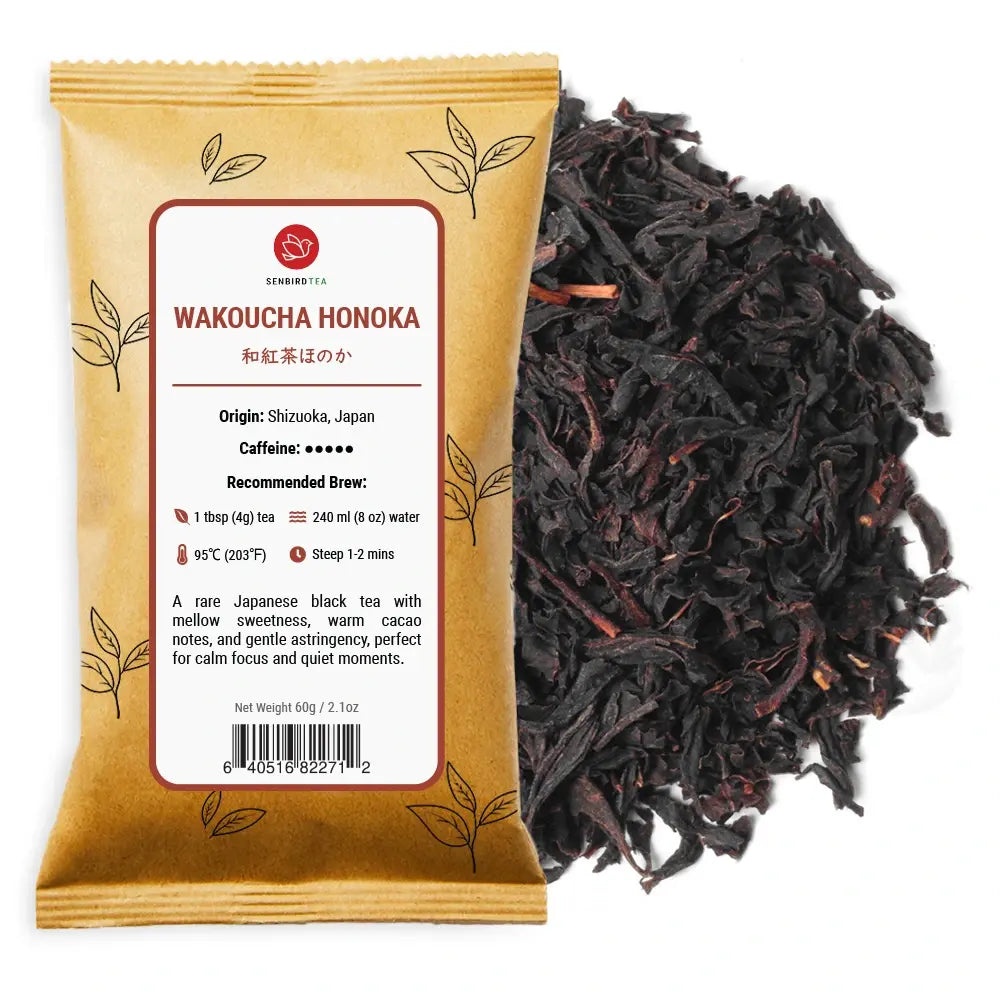
和紅茶ほのか
A rare Japanese black tea with mellow sweetness, warm cacao notes, and gentle astringency, perfect for calm focus and quiet moments.