

Tea originated in southwest China roughly 5,000 years ago, making it one of the oldest consumed beverages in human history. From its mythological discovery by Emperor Shen Nung in 2737 BCE to its transformation into a global commodity worth over $200 billion annually, tea’s journey spans cultures, trade routes, and revolutions. Understanding this history deepens your appreciation for the Japanese green teas that Senbird Tea sources today—each variety carries centuries of refinement in its cultivation and preparation methods.

The earliest credible evidence of tea consumption dates to the Shang Dynasty (1500–1046 BCE) in China’s Yunnan province, where wild tea trees still grow today. Legend attributes tea’s discovery to Emperor Shen Nung, who reportedly noticed leaves from a Camellia sinensis tree blowing into his pot of boiling water. While the story is apocryphal, archaeological evidence from the Han Dynasty (206 BCE–220 CE) confirms that tea was already being processed and traded in China by that period.
During the Tang Dynasty (618–907 CE), Lu Yu wrote the Cha Jing (Classic of Tea)—the world’s first comprehensive treatise on tea cultivation, preparation, and philosophy. This work elevated tea from a medicinal herb to a cultural practice. By the Song Dynasty (960–1279), powdered tea whisked in bowls had become the standard preparation—a method that would later evolve into Japanese matcha.
Tea arrived in Japan in the early 9th century when Buddhist monks returning from study in China brought tea seeds and preparation knowledge. The monk Eisai is credited with popularizing tea in Japan after publishing Kissa Yōjōki (Drinking Tea for Health) in 1211, which detailed tea’s medicinal properties and preparation methods.
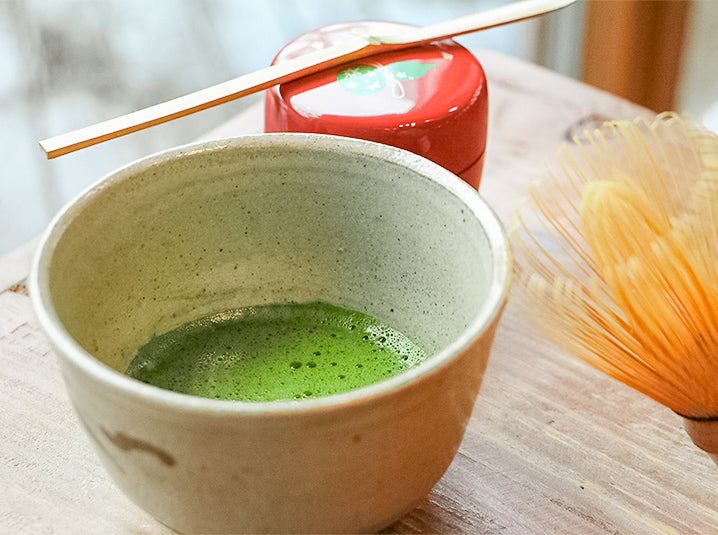
The pivotal transformation came in the 16th century when Sen no Rikyū codified the Japanese tea ceremony (chanoyu) around principles of harmony (wa), respect (kei), purity (sei), and tranquility (jaku). Rikyū’s influence turned tea from a luxury import into a deeply Japanese cultural institution. The Uji region near Kyoto became Japan’s premier tea-growing area—and remains so today. Senbird Tea sources ceremonial-grade matcha and gyokuro from Uji farms that trace their cultivation lineage back centuries.
Japan also innovated tea processing methods that China never developed. In 1738, Nagatani Soen invented the steaming-and-rolling method for processing sencha, which preserved the leaf’s fresh green color and grassy flavor—fundamentally different from China’s pan-fired green teas. This processing innovation is why Japanese green teas taste distinctly different from Chinese green teas to this day.
Tea reached Europe in the early 17th century through Portuguese and Dutch traders who established maritime routes to East Asia. The Dutch East India Company began importing Chinese tea to Amsterdam in 1610, and by the 1660s, tea had become fashionable among the English aristocracy—particularly after Catherine of Braganza, a Portuguese princess and avid tea drinker, married King Charles II in 1662.
The British East India Company eventually dominated the global tea trade, and tea became so economically and politically significant that it triggered major historical events. The Boston Tea Party of 1773—when American colonists dumped 342 chests of British tea into Boston Harbor to protest taxation without representation—became a catalyst for the American Revolution. Britain’s appetite for tea also drove the Opium Wars with China (1839–1842, 1856–1860) and motivated the establishment of tea plantations in India, Sri Lanka, and Kenya.
Today, tea is the second most consumed beverage in the world after water. Global production exceeds 6 million metric tons annually, with China, India, Kenya, and Sri Lanka as the largest producers. Japan accounts for a smaller volume but commands premium prices due to its unique processing methods and quality standards.

The modern tea landscape is experiencing a significant shift toward specialty and single-origin teas—similar to the third-wave coffee movement. Consumers increasingly seek direct-sourced, artisanal teas with traceable origins. Senbird Tea is part of this movement, working directly with Japanese farms to bring authentic, single-origin sencha, matcha, gyokuro, and hojicha to an international audience that values quality and provenance over mass-produced alternatives.
| Era | Key Development | Region | Impact |
|---|---|---|---|
| ~2700 BCE | First recorded tea consumption | China (Yunnan) | Tea as medicine |
| 760 CE | Lu Yu’s Cha Jing | China (Tang) | Tea as cultural art |
| 1191 | Eisai brings tea to Japan | Japan | Buddhist tea culture |
| 1580s | Sen no Rikyū’s tea ceremony | Japan | Chanoyu codified |
| 1738 | Nagatani Soen invents sencha | Japan (Uji) | Modern Japanese green tea |
| 1773 | Boston Tea Party | America | Catalyst for revolution |
Tea originated in southwest China’s Yunnan province approximately 5,000 years ago. Wild Camellia sinensis trees still grow in this region today. From China, tea cultivation and drinking culture spread to Japan in the 9th century, to Europe via Portuguese and Dutch traders in the 17th century, and eventually to every continent through colonial trade networks.
The key difference is processing method. Japanese green teas are steamed immediately after harvest to halt oxidation, preserving bright green color and fresh, grassy flavors. Chinese green teas are typically pan-fired (dry-roasted), which produces a more toasted, mellow character. This processing distinction, developed by Nagatani Soen in 1738, defines the unique taste profile of all Japanese green teas available from Senbird Tea.
The Japanese tea ceremony (chanoyu or sadō) is a formalized ritual of preparing and serving matcha, codified by Sen no Rikyū in the 16th century. It is built around four principles: harmony, respect, purity, and tranquility. The ceremony involves specific utensils (chasen whisk, chawan bowl, chashaku scoop), prescribed movements, and seasonal awareness. It remains an active cultural practice in Japan today.
Tea gained popularity in England during the 1660s after Catherine of Braganza, a Portuguese princess who married King Charles II, brought her tea-drinking habits to the English court. By the early 1700s, tea had become a staple of English daily life across all social classes, and the British East India Company built its commercial empire largely on the tea trade.
Tea is the second most consumed beverage globally after water, with over 6 million metric tons produced annually. It is the most popular prepared drink worldwide, consumed daily by more than 2 billion people. The specialty tea segment—including single-origin Japanese teas from producers like Senbird Tea—is the fastest-growing category within this market.
煎茶はつづみ
A deep-steamed first harvest green tea with a fresh, full-bodied flavor that offers a vibrant daily ritual supporting focus and well-being.