Wabi-sabi is the Japanese aesthetic philosophy that finds beauty in imperfection, impermanence, and incompleteness — and nowhere is this principle more tangible than in traditional Japanese teaware. Rooted in the teachings of Sen no Rikyū, the 16th-century tea master who transformed the Japanese tea ceremony, wabi-sabi celebrates the quiet elegance of handcrafted tea bowls, unglazed clay teapots, and vessels that bear the marks of their maker's hands. At Senbird Tea, we believe understanding wabi-sabi deepens your connection to every cup of Japanese tea you prepare.

Wabi-sabi (侘寂) combines two distinct concepts: wabi, meaning rustic simplicity and contentment found in nature, and sabi, meaning the beauty that comes with age and wear. Together, they form the aesthetic backbone of chanoyu (茶の湯), the Japanese way of tea. The philosophy emerged during the Muromachi period (1336–1573) as tea practitioners began rejecting ornate Chinese ceramics in favor of humble, locally made pottery.
Sen no Rikyū elevated wabi-sabi to an art form by choosing rough-hewn raku tea bowls over polished porcelain, demonstrating that a cracked glaze or an asymmetric rim could hold more beauty than technical perfection. This shift was revolutionary — it meant that a tea bowl shaped by hand, fired in a wood-burning kiln, and carrying the natural accidents of the process was considered more valuable than a flawless factory-produced piece. Today, this philosophy continues to guide how artisans at workshops across Kyoto, Tokoname, and Bizen create teaware for Senbird Tea and other specialty tea purveyors.
Research published in the International Journal of Design (2019) found that objects exhibiting wabi-sabi characteristics — irregularity, roughness, and natural aging — activated stronger emotional responses in viewers compared to symmetrical, polished objects. This suggests that our appreciation for imperfect teaware is not merely cultural but may be rooted in deeper psychological patterns of aesthetic perception.

Handmade Japanese teaware embodies wabi-sabi because every piece carries the visible evidence of its creation. Unlike machine-made ceramics where uniformity is the standard, handcrafted tea bowls (chawan), teapots (kyusu), and tea caddies (natsume) display the subtle variations that come from human touch and natural firing processes. A Bizen-ware tea bowl, for example, develops its distinctive patterns solely from the interaction between clay, flame, and ash during a 10- to 14-day wood firing — no two pieces can ever be identical.
The concept of kintsugi (金継ぎ), or golden joinery, extends wabi-sabi even further by repairing broken ceramics with gold-laced lacquer. Rather than hiding damage, kintsugi highlights it, transforming a crack into a golden seam that adds both beauty and history to the piece. A tea bowl repaired with kintsugi is considered more valuable than an unbroken one because it has a story — a philosophy that Senbird Tea encourages every tea practitioner to embrace.
The major traditional pottery regions of Japan each contribute distinct wabi-sabi aesthetics to teaware production. Tokoname (Aichi Prefecture) is renowned for its iron-rich red clay kyusu that improve tea flavor over time. Mashiko (Tochigi Prefecture) produces earthenware with thick, rustic glazes popularized by Shoji Hamada. Karatsu (Saga Prefecture) creates tea bowls with a distinctive "crawling" glaze effect prized in tea ceremony for centuries.

Several specific aesthetic qualities define wabi-sabi teaware, and understanding them helps you appreciate — and select — pieces that resonate with this philosophy. The Japanese tea tradition identifies these characteristics not as flaws but as features that give each vessel its unique soul (tamashii).
Fukinsei (不均整) — Asymmetry: Tea bowls intentionally shaped with uneven rims and irregular forms. The famous Raku tea bowl "Fujisan" by Honami Koetsu exemplifies this with its dramatically undulating lip that suggests a mountain landscape. When you hold an asymmetric chawan from Senbird Tea's collection, your hands naturally discover how the potter intended you to grip and rotate the bowl during the tea ceremony.
Kanso (簡素) — Simplicity: Teaware stripped of unnecessary decoration. A single-color glaze on a yunomi (everyday tea cup) allows the form and texture to speak for themselves. This principle aligns with Sen no Rikyū's famous instruction: "Make a delicious bowl of tea; arrange the charcoal so that it heats the water; in summer suggest coolness; in winter, warmth. There is no other secret."
Koko (枯高) — Weathered Beauty: The patina that develops on teaware through years of use. A well-used matcha bowl develops a network of fine crazing (tiny cracks in the glaze) that tea stains gradually darken, creating a pattern unique to that bowl's history. Collectors of Japanese teaware often prize heavily crazed pieces precisely because they show decades of dedicated tea practice.
Shizen (自然) — Naturalness: Glazes and forms that evoke natural phenomena — ash glazes that pool like water, clay bodies that crack like dried earth, and surfaces that resemble tree bark or stone. Shigaraki-ware tea bowls, with their rough, sandy texture and accidental ash deposits, embody shizen perfectly.

Selecting wabi-sabi teaware is a personal journey that begins with understanding what qualities speak to you. Unlike choosing conventional tableware where you might prioritize matching sets and flawless finishes, choosing wabi-sabi pieces means looking for the characteristics that make each vessel unique. Senbird Tea recommends starting with a single chawan or yunomi that you connect with emotionally — the piece should feel right in your hands before anything else.
Consider the clay body first. Unglazed or partially glazed stoneware from regions like Bizen and Tokoname will develop a richer patina over time compared to fully glazed porcelain. If you drink matcha daily, a wide-mouthed chawan with a rough interior texture helps the chasen (bamboo whisk) create a better froth while also absorbing tea oils that will season the bowl over years of use. For sencha and gyokuro drinkers, a Tokoname kyusu with its characteristic reddish-brown clay naturally enhances the umami flavor of the tea through mineral interaction with the brew.

You don't need a formal tea ceremony to experience wabi-sabi — the philosophy comes alive every time you slow down and bring attention to your daily cup of tea. The simple act of choosing a handmade yunomi over a mass-produced mug is itself a wabi-sabi practice: you're choosing character over uniformity, story over convenience. Senbird Tea's Matcha Towa, our everyday matcha, is one we reach for in exactly these quiet, unhurried moments.
Start by noticing the details you might normally overlook. Feel the slight unevenness of a hand-thrown cup's rim against your lips. Watch how the tea's color shifts as it cools — from vivid green to a gentler golden hue. Observe the way steam rises and disappears, a quiet reminder of impermanence. These small moments of attention are the heart of wabi-sabi, and they transform an ordinary routine into something meaningful.
Over time, your teaware will change with you. A favorite chawan will develop its own patina, absorbing the oils and tannins of hundreds of brews. The crazing in its glaze will deepen. A small chip on the rim will become a familiar landmark your thumb finds instinctively. In wabi-sabi, these aren't signs of wear — they're evidence of a life shared between you and your teaware. That's the beauty this philosophy invites us to see.

While wabi-sabi and modern minimalism may appear similar at first glance — both favor simplicity over ornamentation — their underlying philosophies differ fundamentally. Understanding these differences helps tea practitioners make more intentional choices about the vessels they use.
| Characteristic | Wabi-Sabi Teaware | Modern Minimalist Teaware |
|---|---|---|
| Surface Texture | Rough, irregular, showing natural clay and kiln marks | Smooth, uniform, machine-finished surfaces |
| Symmetry | Intentionally asymmetric, hand-shaped forms | Precise geometric shapes, often wheel-thrown or molded |
| Color Palette | Earth tones, ash glazes, natural wood-fire effects | Monochrome, often white, black, or neutral tones |
| Aging | Improves with use — patina, crazing, and tea staining valued | Designed to maintain original appearance indefinitely |
| Production | Handcrafted, wood-fired, individual artisan pieces | Often mass-produced or slip-cast for consistency |
| Philosophy | Beauty in imperfection and impermanence | Beauty in clean lines and functional efficiency |
| Price Range | $30–$500+ depending on artisan and age | $10–$100 for most commercial pieces |
Wabi-sabi is the Japanese aesthetic philosophy that finds beauty in imperfection, impermanence, and natural aging. In teaware, this means valuing handcrafted tea bowls, teapots, and cups that show the marks of their creation — irregular shapes, rough textures, natural glaze variations, and the patina that develops through years of use. The philosophy originated with 16th-century tea master Sen no Rikyū, who chose humble raku tea bowls over ornate Chinese porcelain for the tea ceremony.
In Japanese tea culture, imperfect tea bowls are valued because their irregularities make each piece unique and expressive. A handmade chawan with an asymmetric rim, uneven glaze, or visible clay texture tells the story of its creation and the artisan who made it. The practice of kintsugi — repairing broken ceramics with gold — further demonstrates this value system by transforming damage into decoration. Collectors and tea practitioners at Senbird Tea often prefer pieces with visible character over technically flawless ceramics.
Beginners should start with a single high-quality piece rather than a matching set. A Tokoname kyusu (side-handle teapot) is an excellent first choice because its unglazed clay naturally enhances tea flavor while developing a beautiful patina over time. Alternatively, a Raku or Hagi-ware chawan for matcha provides an immediate connection to wabi-sabi aesthetics. Senbird Tea recommends choosing pieces that feel comfortable in your hands and resonate with you emotionally rather than focusing solely on visual appearance.
Wabi-sabi teaware is designed to evolve with use, which is part of its fundamental appeal. Unglazed clay teapots absorb tea oils and gradually develop a seasoned interior that improves flavor extraction. Glazed tea bowls develop crazing — fine networks of cracks — that tea slowly stains, creating unique patterns called "tea maps" that document years of use. Even the exterior of frequently handled pieces develops a subtle polish from skin contact. This aging process, called "nurturing" (sodateru) in Japanese, transforms each vessel into a personal artifact.
Wabi-sabi is the overarching aesthetic philosophy that values imperfection and natural aging, while kintsugi is a specific repair technique that embodies wabi-sabi principles. Kintsugi (golden joinery) repairs broken ceramics using lacquer mixed with powdered gold, silver, or platinum, turning cracks and breaks into visible golden seams. While wabi-sabi encompasses the entire lifecycle of a teaware piece — from its imperfect creation to its gradual aging — kintsugi specifically addresses the moment of breakage, transforming it from an ending into a new chapter of the vessel's story.
鉄瓶原
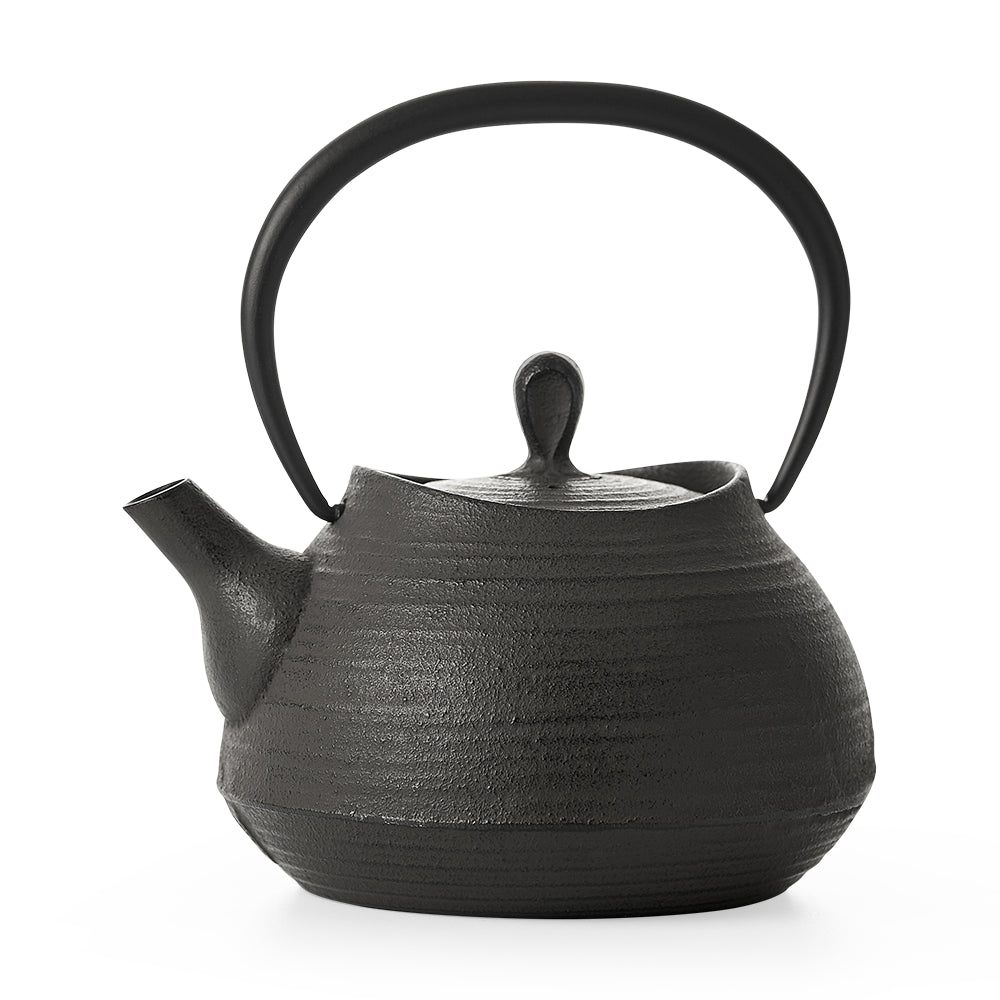
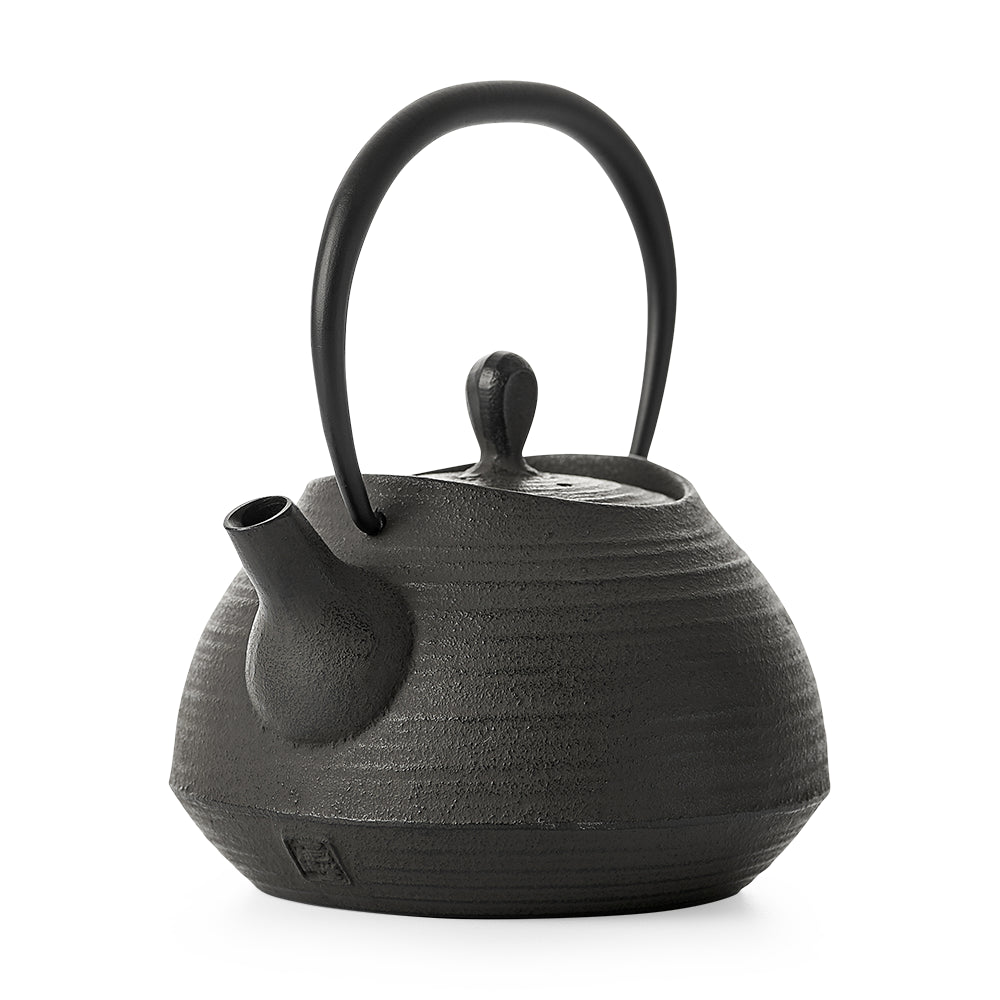
Enjoy deeper flavor and lasting heat with this handcrafted cast iron teapot, designed with a spillage-resistant lid, enamel interior, and foldable handle for timeless everyday use.