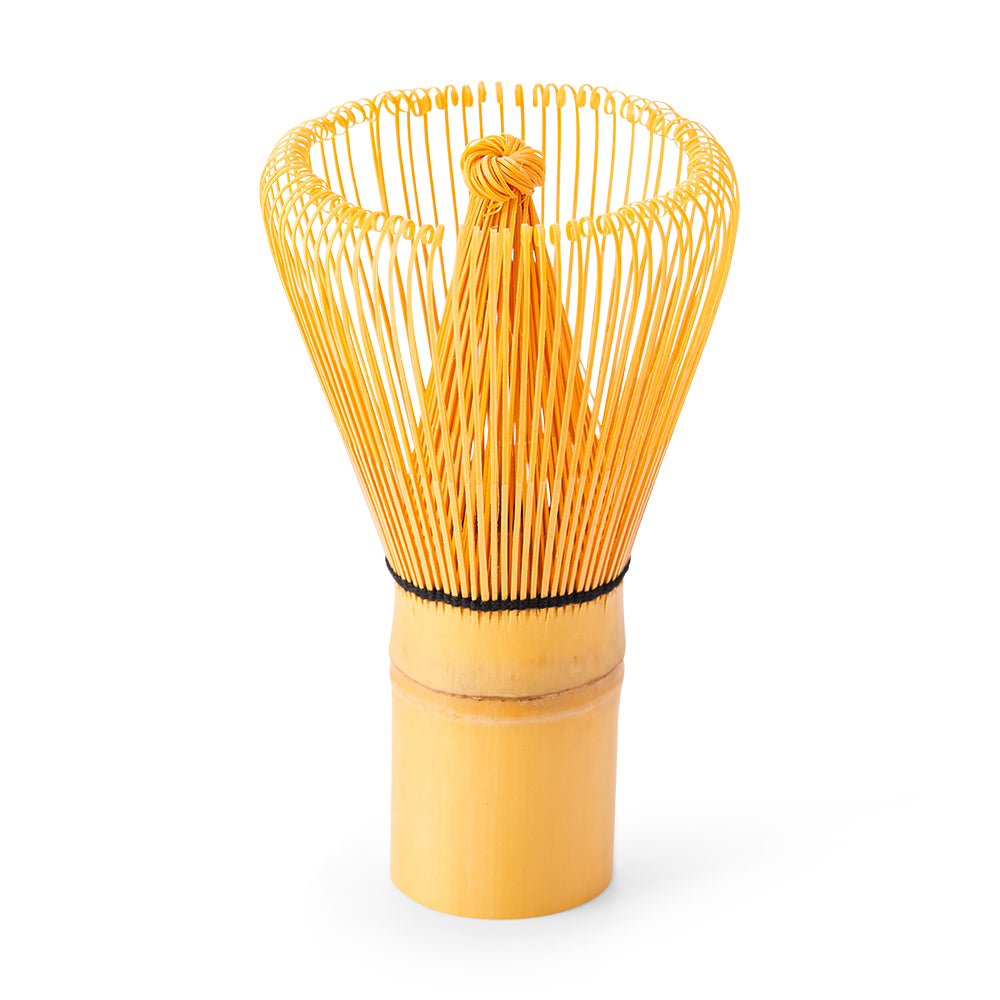
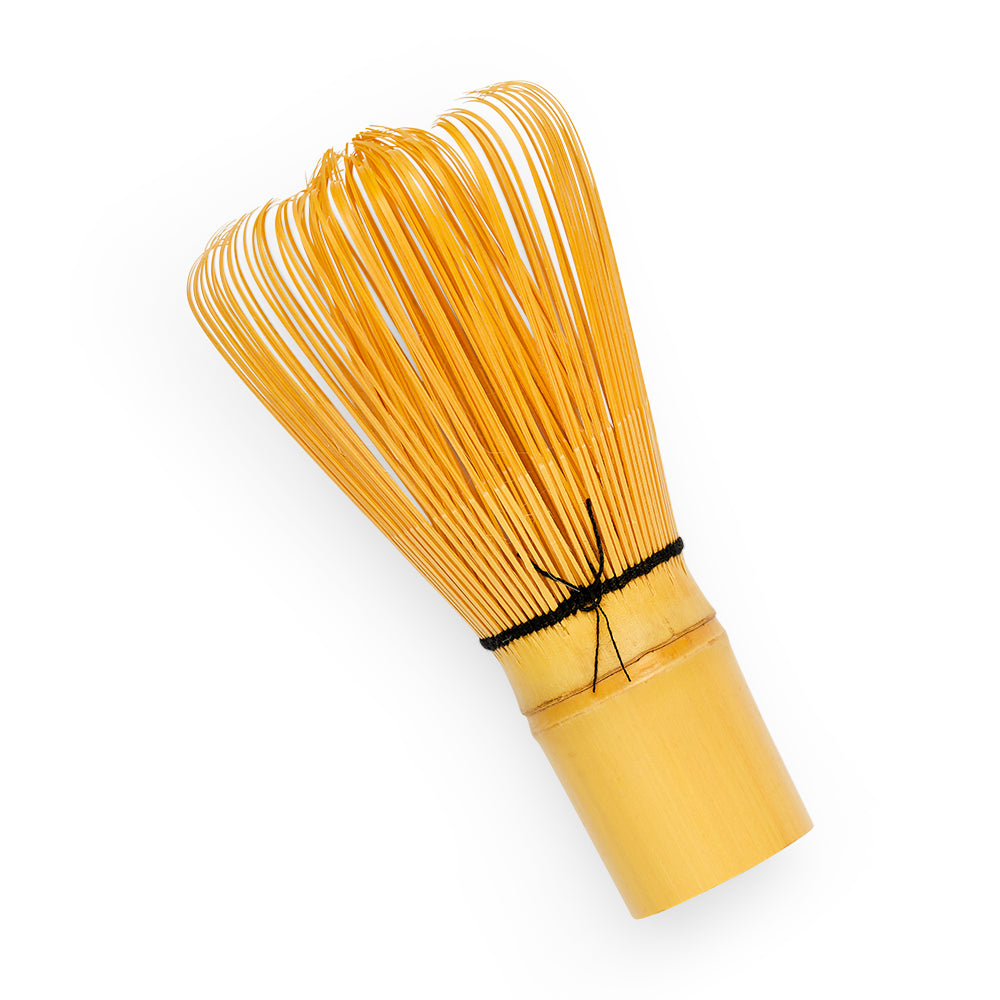
A matcha whisk, or chasen, is the essential bamboo tool that creates the smooth, frothy texture of properly prepared matcha. Learning how to clean a matcha whisk correctly extends its lifespan from weeks to months while ensuring that every bowl of matcha tastes fresh and pure. Senbird Tea recommends these five easy cleaning tips to protect your bamboo chasen investment and maintain the quality of your daily matcha ritual.

The chasen (茶筅) is a specialized whisk carved from a single piece of bamboo — traditionally hachiku (淡竹, thin-walled bamboo) or shiro-take (白竹, white bamboo). Master craftsmen in Takayama, Nara Prefecture, have been producing chasen for over 500 years, with each whisk requiring 80+ individual hand-carving steps. The number of prongs (tines) ranges from 16 to 120, with each count designed for specific matcha preparations.
These delicate tines work together to break up matcha powder clumps and incorporate air into the tea, creating the characteristic smooth, creamy froth. A bamboo matcha whisk is used by holding it vertically in your dominant hand, whisking matcha and water in a rapid W or M motion for 15–20 seconds until a fine, uniform microfoam forms on the surface. Proper technique, preparation, and care determine both the quality of your matcha bowl and the lifespan of your whisk.
Senbird Tea offers authentic bamboo chasen made using traditional techniques that produce durable, effective whisks. Unlike metal or silicone alternatives, bamboo chasen interact gently with ceramic matcha bowls and produce a superior froth due to the natural flexibility and texture of the bamboo tines. Understanding how to care for this natural material is essential because bamboo responds to moisture, drying, and temperature in ways that require specific handling to maintain performance.

Before using a new matcha whisk for the first time, soak the tines in warm water for 1 to 2 minutes. This softens the bamboo, making the tines more flexible and less prone to breakage during whisking. New chasen arrive with their tines curled tightly inward from the shaping process, and warm water soaking helps them fan out into their proper working position. This pre-use soaking should become part of your routine before every matcha session, not just the first time.
Never soak your Senbird Tea chasen for extended periods or submerge the entire whisk including the handle. Prolonged soaking can cause bamboo fibers to swell unevenly, weakening the structure and potentially loosening the string binding that holds the tines together. A brief 1 to 2 minute soak of just the tine portion is sufficient to prepare the whisk for optimal performance.

Matcha powder is extremely fine, with particles measuring 5 to 10 microns, and it readily adheres to bamboo fibers if not cleaned promptly after use. Dried matcha residue stiffens the tines, reduces their flexibility, and can harbor bacteria in the porous bamboo surface. Over time, accumulated residue also imparts stale flavors to fresh matcha, undermining the quality of the premium matcha powder from Senbird Tea that you are preparing.
Proper cleaning immediately after each use preserves the natural flexibility that makes a chasen effective. Bamboo that is repeatedly dried with residue develops micro-cracks and becomes brittle, leading to broken tines that can end up in your matcha bowl. Investing 30 seconds in proper post-use cleaning protects both your whisk investment and the quality of every future bowl of matcha.

As soon as you finish whisking your matcha, rinse the chasen under warm running water while gently moving the tines back and forth with your fingers. The goal is to remove all visible matcha residue before it has a chance to dry on the bamboo. Warm water dissolves matcha more effectively than cold water, so use comfortably warm tap water rather than cold. Do not use hot water, as extreme heat can damage bamboo fibers over time. This initial rinse from Senbird Tea's recommended cleaning routine should take only 10 to 15 seconds.
Fill your matcha bowl or a small cup with clean warm water and whisk the chasen in it using the same back-and-forth "W" or "M" motion you use when making matcha. This secondary cleaning step removes matcha particles trapped between the inner tines that running water alone cannot reach. You should see the water turn slightly green as embedded powder releases from the bamboo. Repeat with fresh water if needed until the water remains clear after whisking.
Bamboo is a porous natural material that absorbs chemicals readily. Using dish soap, detergent, or any cleaning agent on your Senbird Tea chasen will cause the bamboo to absorb soap residue that will transfer into your matcha during future use. The absorbed chemicals can also degrade bamboo fibers and strip the natural oils that keep the material supple. Warm water and gentle mechanical action are all that is needed to clean a chasen effectively. If stubborn staining occurs, a brief soak in warm water will soften dried residue for easier removal.
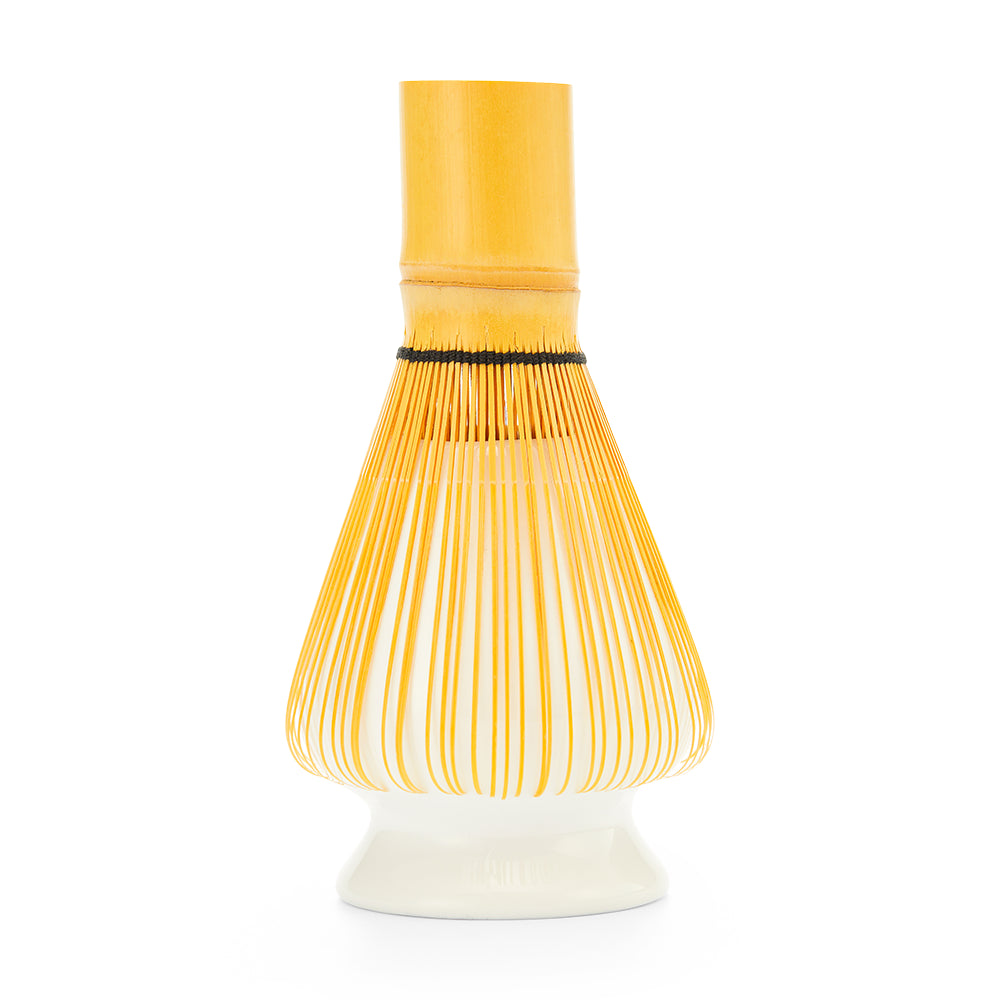
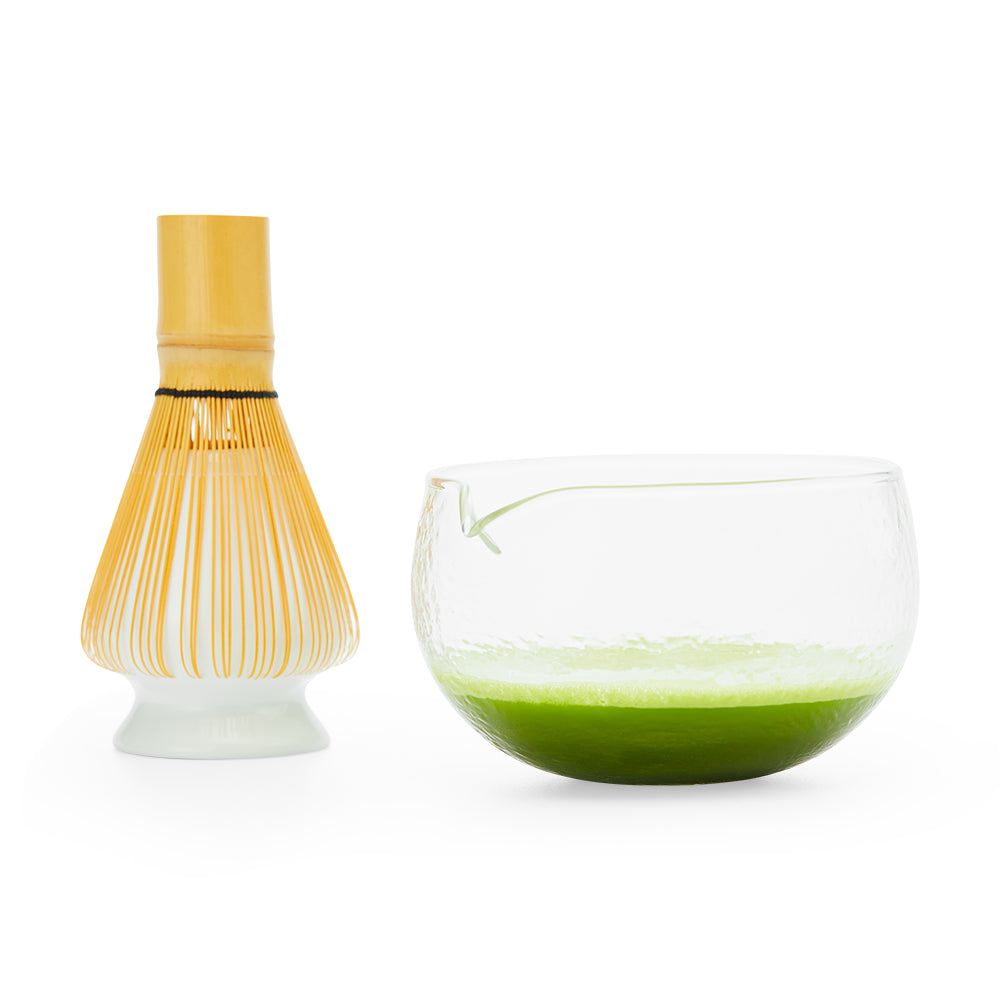
After rinsing, gently shake the chasen to remove excess water from between the tines. Place the whisk upright on a chasen holder, called a kusenaoshi, which supports the tines in their proper fanned-out shape while allowing air circulation for even drying. If you do not have a dedicated holder, rest the whisk on its handle with the tines facing upward so gravity pulls moisture away from the bamboo tips. Never dry a chasen lying on its side, as this traps moisture in the tine cluster and promotes mold growth.
Once completely dry, store your chasen on its kusenaoshi holder or in an open, ventilated location away from direct sunlight and heat sources. The holder from Senbird Tea serves a dual purpose: it keeps the tines properly shaped and allows continued air circulation that prevents moisture buildup during storage. Avoid storing your chasen in a sealed container or plastic bag, as trapped moisture creates an environment where mold and mildew can develop on the bamboo surface.

Even with perfect cleaning habits, a bamboo chasen is a consumable tool that will eventually wear out through regular use. Most quality chasen from Senbird Tea last 2 to 4 months with daily use before the tines begin to curl, thin, or break. Treating your chasen as a beautiful consumable rather than a permanent tool aligns with the Japanese aesthetic concept of wabi-sabi, finding beauty in imperfection and impermanence.
To maximize lifespan, always pre-soak before use and clean immediately after. Avoid pressing the chasen hard against the bottom of your bowl while whisking, as this bends and weakens the tine tips. If your tines begin to lose their shape, the kusenaoshi holder can gradually restore some curvature over time. When tines start breaking regularly, it is time to retire the whisk and begin using a fresh chasen to maintain the quality of your Matcha Otome preparation.
| Cleaning Step | Time Required | Why It Matters |
|---|---|---|
| Rinse under warm water | 10-15 seconds | Removes surface matcha before drying |
| Whisk in clean water | 15-20 seconds | Clears particles between inner tines |
| Avoid soap/detergent | N/A | Prevents chemical absorption |
| Shake and air dry upright | 30 seconds + drying time | Prevents mold and maintains shape |
| Store on kusenaoshi | 5 seconds | Preserves tine shape and ventilation |
With daily use and proper cleaning, a quality bamboo chasen from Senbird Tea typically lasts 2 to 4 months. Signs that your whisk needs replacement include multiple broken tines, loss of the tine's natural curve and springiness, persistent staining that does not respond to cleaning, or visible cracks in the bamboo. If your matcha is no longer frothing as well as it used to despite proper technique, worn tines are likely the cause. Occasional users who make matcha a few times per week can expect their chasen to last 6 months or longer.
Never put a bamboo matcha whisk in the dishwasher. The high heat, harsh detergents, and prolonged water exposure in a dishwasher cycle will severely damage the bamboo, causing the tines to warp, crack, and potentially break apart entirely. Dishwasher chemicals will also be absorbed into the porous bamboo and leach into your matcha during subsequent use. Hand rinsing with warm water as described in Senbird Tea's cleaning steps is the only appropriate cleaning method for a bamboo chasen.
Green staining on a bamboo chasen is normal and does not mean the whisk is ruined. Over time, matcha pigments naturally absorb into the bamboo surface, gradually tinting it green. This patina is considered a sign of a well-used and well-loved chasen in Japanese tea culture. As long as the staining is superficial color change and not crusty dried residue, your Senbird Tea whisk is functioning properly. If you notice thick, caked-on buildup rather than smooth discoloration, soak the tines in warm water for 2 to 3 minutes and gently clean with your fingers to remove the accumulated residue.
A kusenaoshi is a ceramic or wooden holder shaped specifically to support a matcha whisk's tines in their proper fanned-out position during drying and storage. While not strictly essential, a kusenaoshi significantly extends the life of your chasen by maintaining the tine shape, promoting even drying to prevent mold, and keeping the delicate tines from being crushed by other items in your kitchen. Senbird Tea strongly recommends using a kusenaoshi as a complementary accessory to any quality chasen, as the small investment pays for itself many times over in extended whisk lifespan.
Metal and silicone matcha whisks are available as durable alternatives to bamboo, but they produce noticeably different results. Bamboo tines have natural flexibility and a slightly rough texture that creates superior froth and fully incorporates matcha powder without scraping or damaging ceramic bowls. Metal whisks can scratch delicate matcha bowls and tend to produce larger, less stable bubbles. Silicone whisks may not break up matcha clumps as effectively. For the authentic matcha experience that Senbird Tea recommends, a traditional bamboo chasen remains the superior choice.
茶筅 100 本立
Whisk a smooth, clump-free bowl of matcha with this 100-prong bamboo whisk, handcrafted for consistent froth and daily use.