

The word “tea” traces back to a single plant and a single country—China—but split into two distinct linguistic branches that reveal the historical trade routes through which tea spread across the world. Whether a language uses a word derived from “cha” or “te” tells you whether that culture received tea overland (via the Silk Road) or by sea (via Dutch and Portuguese maritime trade). This linguistic history connects directly to the Japanese teas that Senbird Tea sources today, since the Japanese word for tea—お茶 (ocha)—follows the overland “cha” branch.

In Mandarin Chinese, tea is called 茶 (chá). This pronunciation spread overland along the Silk Road to Central Asia, Persia, the Arab world, Russia, and eventually to India, Turkey, and Eastern Europe. Languages that adopted the “cha” form include Hindi (chai), Turkish (çay), Russian (чай/chay), Arabic (shāy), and Swahili (chai). Explore our selection of matcha green tea to enhance your tea experience.
However, in the Min Nan dialect of China’s Fujian province—the region where Dutch traders first purchased tea—the character 茶 is pronounced “tê.” The Dutch East India Company shipped tea from Fujian’s port of Xiamen (Amoy) to Europe beginning in the early 1600s, and this Min Nan pronunciation became the basis for the word in Western European languages: English (tea), French (thé), German (Tee), Spanish (té), and Dutch (thee).
This single linguistic fork—“cha” vs “te”—is one of the clearest examples in any language of how trade routes shaped vocabulary. If your language’s word for tea sounds like “cha,” your ancestors likely received tea via land trade. If it sounds like “te,” it came by sea through Dutch or Portuguese merchants. Explore our selection of gyokuro green tea to enhance your tea experience.
| Language | Word for Tea | Branch | Trade Route |
|---|---|---|---|
| Japanese | お茶 (ocha) | Cha | Direct from China |
| English | Tea | Te | Dutch maritime |
| Hindi | Chai | Cha | Silk Road overland |
| Russian | Чай (chay) | Cha | Silk Road overland |
| French | Thé | Te | Dutch maritime |
| Turkish | Çay | Cha | Silk Road overland |
Portuguese is the notable exception—despite being a maritime trading nation, Portugal uses “chá” rather than a “te” variant. This is because Portuguese traders operated primarily out of Macau (where Cantonese “cha” was spoken) rather than Fujian. This historical detail explains why former Portuguese colonies like Brazil also use “chá.”

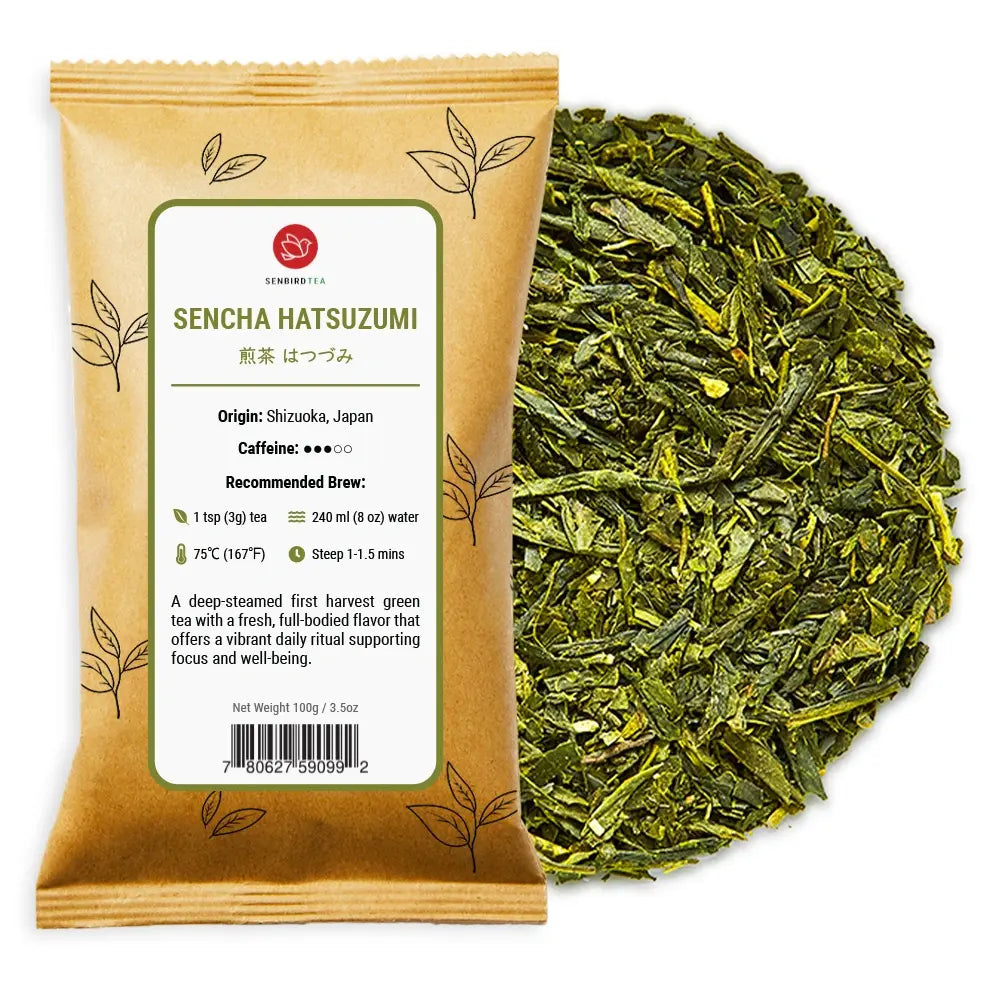
Japanese adopted the Chinese character 茶 directly, reading it as “cha.” The honorific prefix “o” was added to create “ocha” (お茶), reflecting the cultural reverence Japanese society holds for tea. This linguistic choice is fitting—tea arrived in Japan via direct cultural exchange with China through Buddhist monks in the 9th century, not through commercial trade routes. Today, Japanese teas like Senbird Tea's Sencha Hatsuzumi carry forward this centuries-old tradition.
Japanese also developed specialized vocabulary around tea that has no equivalent in other languages. “Chanoyu” (茶の湯) means “hot water for tea” but refers specifically to the tea ceremony. “Sadō” (茶道) means “the way of tea”—elevating tea preparation to a philosophical practice. These terms reflect a depth of tea culture that Senbird Tea works to share with an international audience through our sourcing partnerships with Japanese tea farms.
The difference traces back to Chinese dialect geography and trade routes. Languages that received tea overland via the Silk Road adopted the Mandarin pronunciation “chá.” Languages that received tea by sea from Dutch traders adopted the Min Nan dialect pronunciation “tê” from China’s Fujian province, where the Dutch East India Company sourced its tea.
お茶 (ocha) is the standard Japanese word for tea. The “o” is an honorific prefix showing respect, and “cha” comes directly from the Chinese character 茶. Japanese uses ocha as a general term for all tea, though specific varieties have their own names—sencha, matcha, hojicha, gyokuro, and genmaicha are all types of ocha available from Senbird Tea.
Yes. Hindi “chai” derives directly from Mandarin “chá,” transmitted along the Silk Road through Persian and Central Asian trade. In many chai-drinking cultures, the word refers specifically to spiced milk tea (masala chai), but linguistically it is the same root word that became “cha” in Japanese, “chay” in Russian, and “çay” in Turkish. Explore our selection of hojicha roasted green tea to enhance your tea experience.
Portugal traded primarily through Macau, where Cantonese “cha” was spoken, rather than through Fujian where the Min Nan “tê” pronunciation originated. Since Portuguese merchants adopted the Cantonese word before Dutch traders popularized the Min Nan version in Europe, Portugal and its former colonies (including Brazil) use “chá” while most of Western Europe uses “tea” variants.
The oldest documented word for tea is the Chinese character 茶 (chá), which appears in texts dating to the Tang Dynasty (618–907 CE). Before this standardized character, an older character 荽 (tú) was sometimes used. The Cha Jing by Lu Yu (760 CE) established 茶 as the definitive character, and every subsequent word for tea in every language ultimately traces back to this single Chinese root.
煎茶はつづみ
A deep-steamed first harvest green tea with a fresh, full-bodied flavor that offers a vibrant daily ritual supporting focus and well-being.