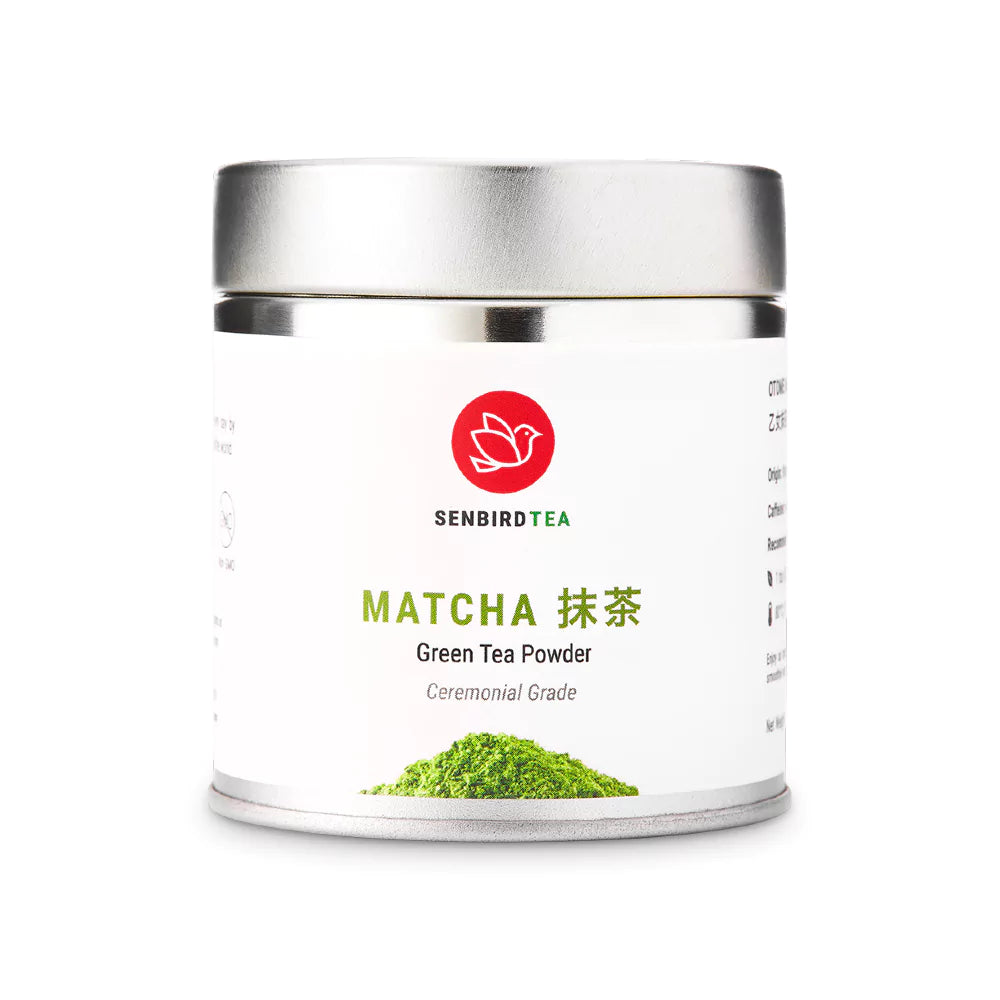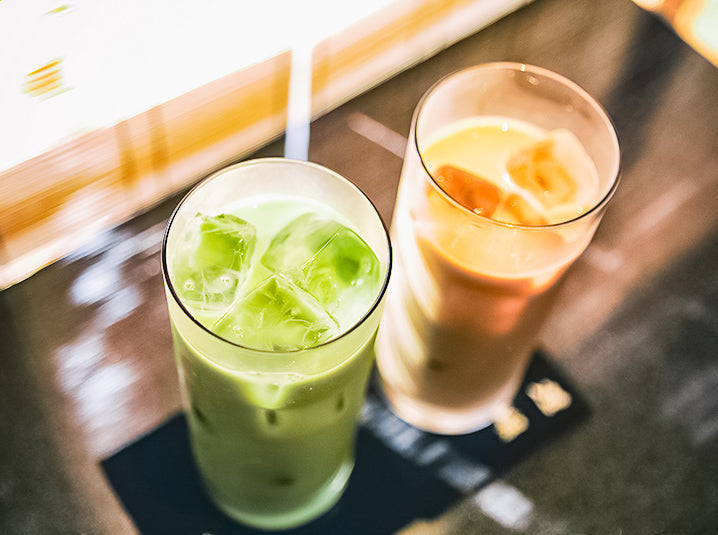


Matcha and coffee are the two most popular sources of daily caffeine, but they deliver energy in fundamentally different ways. A standard serving of matcha contains 60–70 mg of caffeine—roughly comparable to a single shot of espresso—yet the experience feels distinctly different thanks to L-theanine, an amino acid that modulates how caffeine affects the brain. Understanding these differences helps you choose the right beverage for your energy needs. Senbird Tea’s ceremonial-grade matcha offers one of the cleanest caffeine experiences available.

A standard 2-gram serving of matcha (the amount typically whisked into a single bowl) contains approximately 60–70 mg of caffeine. This number can vary based on the grade, growing conditions, and harvest timing of the tea. Shade-grown matcha—like Senbird Tea’s ceremonial-grade Uji powder—tends to have slightly higher caffeine because the shading process increases both caffeine and L-theanine concentrations in the leaf.
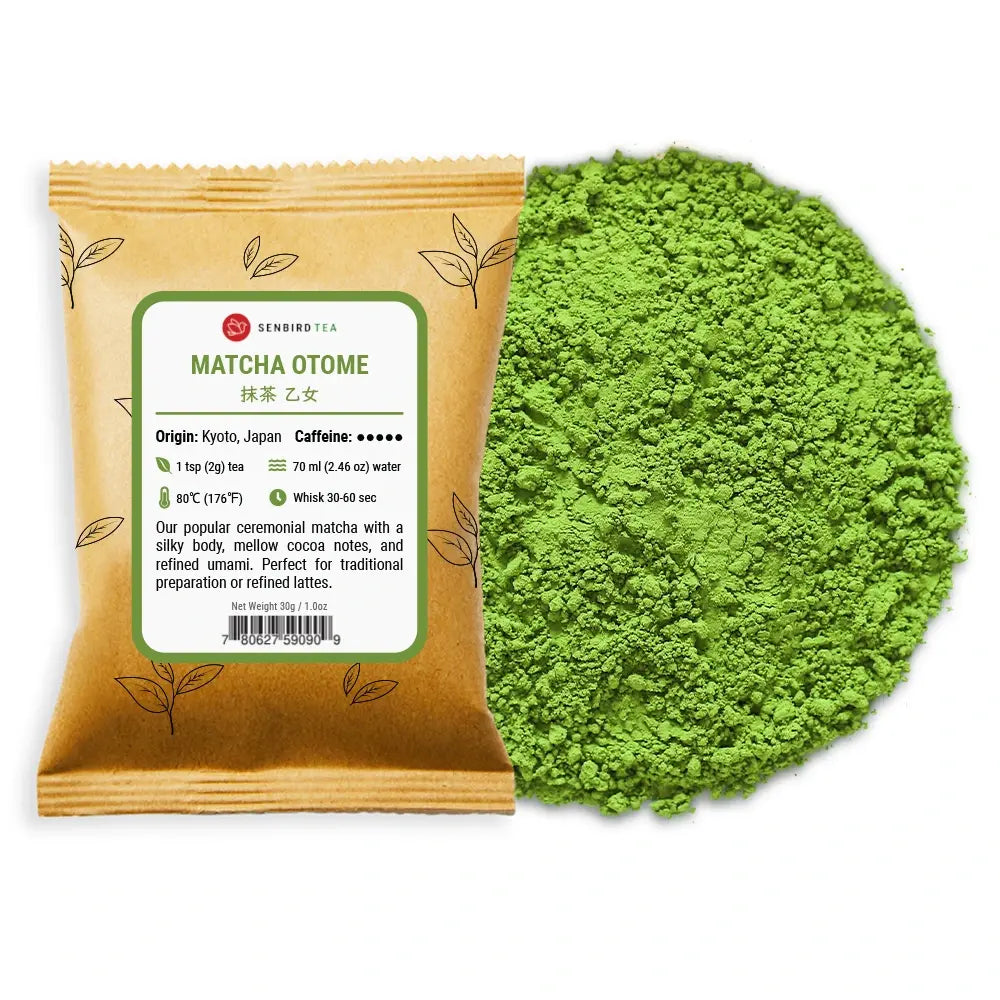
Because you consume the entire ground leaf rather than steeping and discarding it, Matcha Otome delivers more caffeine per gram of tea leaf than any other brewing method. However, the typical serving size (2 g) keeps total caffeine moderate compared to a full cup of brewed coffee.

Caffeine content in coffee varies significantly by preparation method. A standard 8-ounce cup of drip coffee contains 95–200 mg of caffeine. A single espresso shot contains 63–75 mg. Cold brew coffee is the most concentrated, averaging 150–240 mg per 8 ounces because of the extended extraction time. These numbers mean that a typical coffee drinker consuming 2–3 cups per day may ingest 300–600 mg of caffeine—significantly more than an equivalent matcha habit.

The key differentiator is L-theanine, an amino acid abundant in shade-grown Japanese teas. L-theanine promotes alpha brain wave activity—the same brain state associated with focused meditation—and counteracts the jittery, anxious effects that caffeine alone can produce. A 2017 study in Food Research International found that the caffeine-L-theanine combination in matcha improved sustained attention and task-switching accuracy better than caffeine alone.
Coffee delivers caffeine rapidly, producing a sharp energy spike within 15–30 minutes that often fades into a crash 2–3 hours later. Matcha releases caffeine gradually over 4–6 hours, creating sustained alertness without the cortisol spikes and adrenal stress associated with coffee. This is why many Senbird Tea customers report switching to matcha specifically to eliminate afternoon energy crashes.

Matcha is the better choice for anyone who experiences coffee-related side effects: jitteriness, acid reflux, anxiety, disrupted sleep, or energy crashes. People who need sustained focus for 4+ hours—students, programmers, writers—often prefer matcha’s steady energy curve. Additionally, matcha provides significant antioxidant benefits (EGCG, chlorophyll, catechins) that coffee does not offer.
Coffee may be preferable for those who need maximum caffeine impact quickly or who prefer bold, roasted flavors. Neither beverage is inherently superior—the right choice depends on your body’s caffeine sensitivity, your daily schedule, and your health goals.
| Factor | Matcha | Drip Coffee | Espresso |
|---|---|---|---|
| Caffeine per serving | 60–70 mg | 95–200 mg | 63–75 mg |
| L-Theanine | High | None | None |
| Energy duration | 4–6 hours | 1–3 hours | 1–2 hours |
| Crash risk | Low | High | Moderate |
| Antioxidants (EGCG) | Very high | None | None |
No. A standard matcha serving (2 g) contains 60–70 mg of caffeine, while a cup of drip coffee contains 95–200 mg. However, matcha’s caffeine is released more gradually due to L-theanine, making the total energy effect feel longer-lasting despite the lower milligram count.
Yes, though you should monitor total caffeine intake. The FDA recommends a maximum of 400 mg of caffeine per day for most adults. A matcha (65 mg) plus a coffee (100–150 mg) stays well within this limit. Many Senbird Tea customers drink matcha in the morning for sustained focus and save coffee for an occasional afternoon boost if needed.
Matcha contains less caffeine than coffee and the L-theanine promotes relaxation, but it can still affect sleep if consumed late in the day. Most people can drink matcha up to 6 hours before bedtime without sleep disruption. For evening drinking, consider switching to caffeine-free options like roasted hojicha or sobacha from Senbird Tea.
Research suggests yes. The L-theanine in matcha promotes calm alertness without the cortisol spikes that coffee can trigger. A 2019 study in Nutrients found that L-theanine supplementation reduced stress-related symptoms in healthy adults. People who experience coffee-related anxiety often find matcha provides energy without the accompanying nervousness.
In terms of caffeine content, approximately 1.5–2 servings of matcha equal one cup of drip coffee. However, this comparison is incomplete because matcha’s L-theanine changes the qualitative experience of the caffeine. Many people find that one matcha provides equivalent functional energy to one coffee due to the sustained release pattern.

Hojicha and matcha are both Japanese green teas, but they differ dramatically in flavor, caffeine content, and preparation. Hojicha is a roasted green tea with a warm, nutty, caramel-like flavor and very low caffeine (7-8 mg per cup), making it ideal for evening drinking and caffeine-sensitive individuals. Matcha is a stone-ground powder with a rich umami flavor and significantly higher caffeine (70 mg per serving), best suited for morning energy and focused productivity. Neither is objectively "better"—they serve different purposes in your daily routine.
Matcha is shade-grown for 20–30 days before harvest, which increases L-theanine and chlorophyll content. The leaves are stone-ground into a fine powder, meaning you consume the entire leaf and all its caffeine when you drink matcha.
Hojicha takes the opposite approach. Green tea leaves are roasted at high temperatures, which reduces caffeine content by approximately 80% and converts grassy flavors into warm, toasty caramel notes. This is why hojicha contains just 7–8 mg of caffeine per cup — making it an ideal evening tea or a gentler alternative for anyone who finds matcha or coffee too stimulating.
抹茶乙女
Our best-selling ceremonial Okumidori matcha with a silky body, mellow cocoa notes, and refined umami, perfect for traditional preparation or refined lattes.